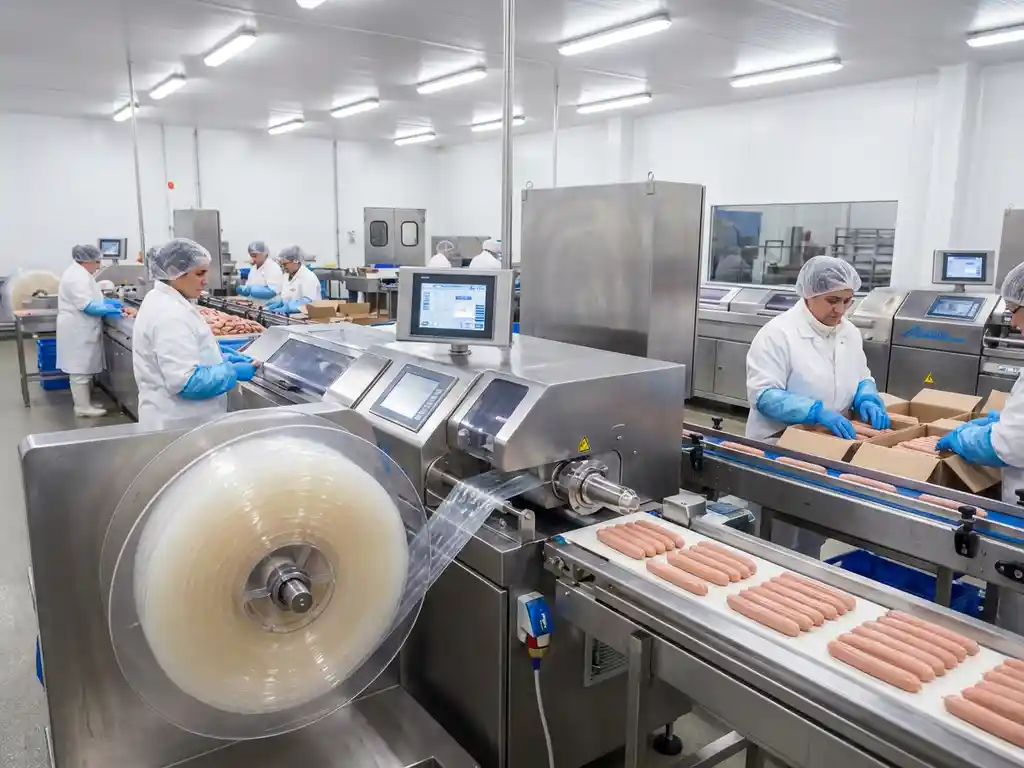
Switching to alginate casings can significantly boost production line efficiency by reducing reliance on manual labor and ensuring consistent product quality. Alginate casings, derived from seaweed, offer a plant-based alternative to traditional casings, improving operational speed and cost-effectiveness. This article explores how alginate casings work, their benefits over traditional options, potential challenges during the transition, and how we provide innovative solutions to optimize your production line while focusing on cost reduction in the food industry.
What are alginate casings and how do they work?
Alginate casings are plant-based casings used in sausage production, derived from seaweed. They serve as an alternative to traditional natural or collagen casings. Alginate, a natural polymer, forms a gel-like structure that can be co-extruded with sausage meat, creating a seamless casing. This method supports high-speed production lines, making it a popular choice in modern food engineering. The use of alginate casings reduces waste and provides consistent quality, which is essential for scalable food production and aligns with the vision of “food for tomorrow.”
How does switching to alginate casings impact production line efficiency?
Switching to alginate casings can enhance production line efficiency by enabling faster throughput and reducing labor costs. Alginate casings are designed for continuous, high-speed production, minimizing downtime often associated with traditional casing methods. This efficiency translates into cost savings and increased output, meeting the demands of modern food engineering operations. Furthermore, the consistency of alginate casings reduces the risk of production errors, ensuring reliable product quality and supporting efforts for cost reduction in the industry.
What are the benefits of alginate casings over traditional casings?
Alginate casings offer several advantages over traditional casings, such as natural or collagen casings. They are more sustainable, being 100% plant-based and derived from renewable seaweed resources. Alginate casings are easier to handle and store, reducing the need for specialized storage conditions. Additionally, they often result in cost savings due to lower material costs and reduced labor requirements. This makes alginate casings an attractive option for companies looking to enhance operational efficiency and environmental performance.
What challenges might arise when transitioning to alginate casings?
Transitioning to alginate casings may present challenges such as equipment adjustments and staff training. Existing production lines may need modifications to accommodate the co-extrusion technology required for alginate casings. Additionally, staff may require training to understand the new processes and ensure optimal operation. To mitigate these challenges, careful planning and expert guidance are crucial to ensure a smooth transition and maximize the benefits of alginate casings.
How Vaess helps with alginate casings
At Vaess, we lead the way in providing comprehensive alginate casing solutions through our AgerGel range. Our expertise in alginate technology supports high-speed, continuous production lines, enhancing efficiency and product quality. We offer:
- End-to-end support for transitioning to alginate casings
- Technological innovations for seamless integration into existing lines
- Training and assistance to ensure staff are fully equipped
- A global presence with local support to meet your specific needs
Partner with us to optimize your production line and meet the demands of tomorrow’s food industry. Our solutions not only enhance operational efficiency but also contribute to cost reduction, embodying the spirit of “food for tomorrow.” Contact us today to learn more about our solutions.
Gerelateerde artikelen
- How do alginate and natural casings compare in terms of batch-to-batch consistency for industrial buyers?
- What is the future of food technology?
- What are the key technical requirements for integrating alginate systems into automated lines?
- How do alginate and collagen casings compare on total material cost per kilogram of output?
- What competitive advantage does alginate casing technology offer over conventional casings?