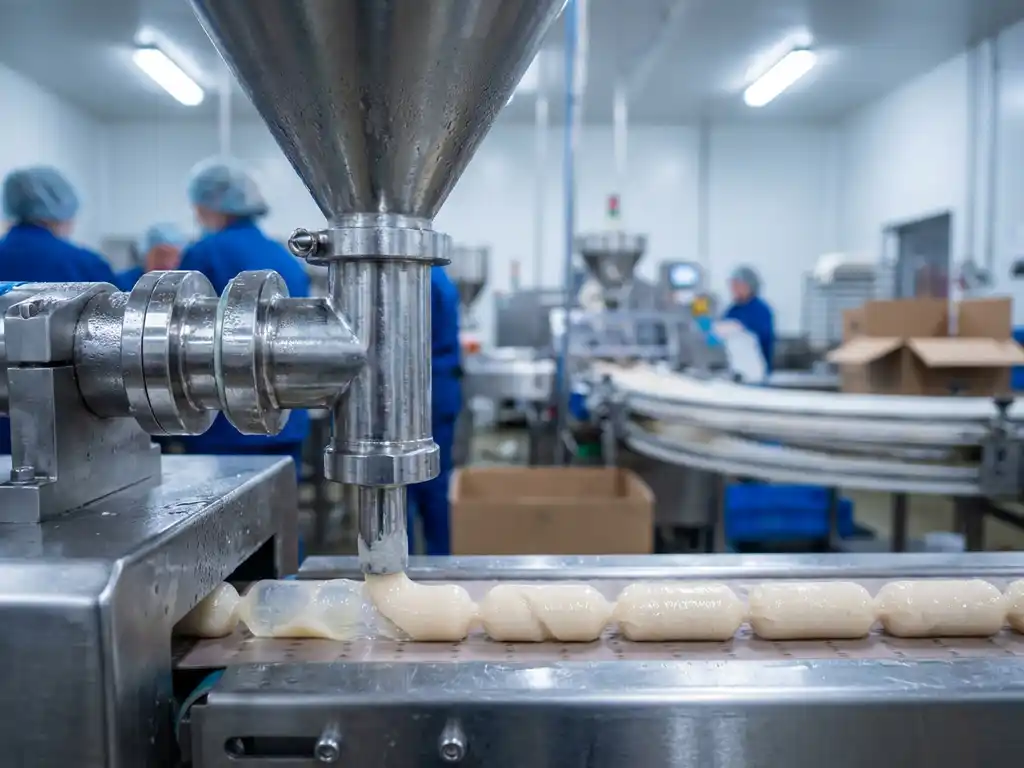
Alginate casing technology significantly enhances throughput on high-speed filling lines by providing a seamless, efficient alternative to traditional casings. Made from seaweed, alginate casings are engineered for continuous co-extrusion lines, enabling faster production with less waste. This article explores the basics of alginate casing technology, its benefits over traditional methods, and strategies for optimizing production with this innovative solution.
What is alginate casing technology, and how does it work?
Alginate casing technology uses a seaweed-derived substance to create casings for sausages and other food products. This plant-based casing is applied through co-extrusion, in which the filling and casing are formed simultaneously. The alginate gel solidifies upon contact with a calcium solution, creating a durable yet flexible casing that mimics traditional options. This technology allows for precise control over casing thickness and uniformity, making it ideal for high-speed manufacturing.
How does alginate casing technology improve throughput on high-speed filling lines?
Alginate casing technology boosts throughput by streamlining the production process. Unlike traditional casings, which require manual handling and frequent changeovers, alginate casings are produced continuously, reducing downtime. The co-extrusion method ensures a consistent product flow, minimizing stoppages and maximizing output. These efficiencies make alginate casings particularly well suited for high-speed filling lines, enhancing overall productivity and achieving significant cost reduction in the food industry.
What are the benefits of using alginate casing over traditional methods?
Compared to traditional casings, alginate casings offer several advantages:
- Cost-effectiveness: Lower material and labor costs due to reduced handling.
- Operational efficiency: Continuous production without the need for frequent casing changes.
- Sustainability: Made from renewable seaweed resources, reducing environmental impact.
- Quality: Consistent casing thickness and texture, enhancing product uniformity.
How can companies optimize their production with alginate casing technology?
To maximize the benefits of alginate casing technology, companies should:
- Invest in high-quality co-extrusion equipment to ensure seamless integration.
- Train staff on the specific handling and maintenance of alginate systems.
- Regularly evaluate production processes to identify and address bottlenecks.
- Collaborate with experts to innovate and customize solutions for specific needs.
How Vaess helps with alginate casing
At Vaess, we support companies in implementing alginate casing technology with our comprehensive solutions:
- Provide industry-leading expertise in alginate casing sausage technology.
- Offer tailored guidance and training to optimize your production lines.
- Facilitate testing and innovation sessions at our Food Technology Centres.
Contact us to explore how we can enhance your production efficiency and meet evolving consumer demands with Vaess’s vision of ‘food for tomorrow’.
In summary, alginate casing technology presents a revolutionary approach to sausage production, offering substantial improvements in cost, efficiency, and sustainability. By adopting this technology, companies can significantly enhance their production capabilities, meeting the growing demand for high-quality, sustainable food products. Reach out to Vaess to learn more about our innovative solutions.
Gerelateerde artikelen
- What quality assurance protocols differ between alginate and natural casing supply chains?
- Which alternative proteins currently available in supermarkets offer the best nutritional value for everyday consumers?
- How do you manage alginate sourcing risk when primary seaweed harvests are disrupted?
- How does switching to alginate casings affect production line efficiency?
- What regulatory changes in the EU are affecting sausage casing material selection?