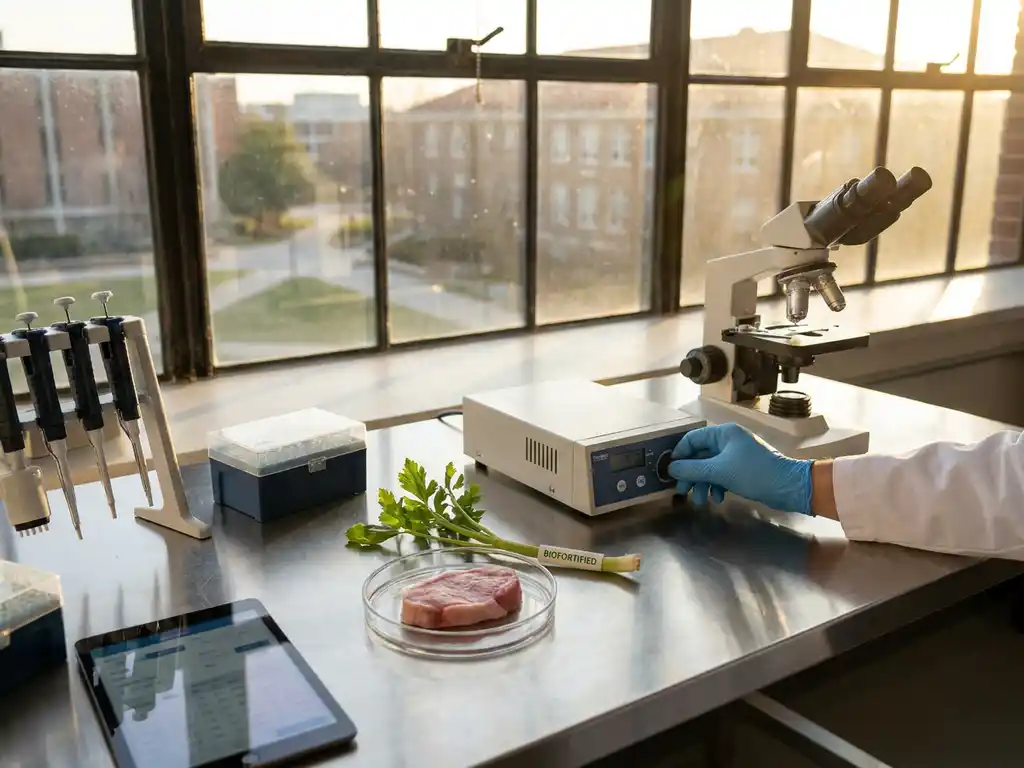
Regulatory frameworks are struggling to keep pace with lab-grown meat and biofortified crop commercialization due to the rapid advancement of technology and evolving consumer demands. These innovations challenge existing regulations that were not designed for novel food technologies. The complexity of ensuring safety, quality, and consumer transparency further complicates regulatory adaptation. This article explores how these frameworks impact commercialization, the role of innovation in overcoming challenges, and how our hybrid food innovation strategies align with regulatory needs. For more insights into our industry focus, visit our industries page.
What are regulatory frameworks and why are they struggling with lab-grown meat and biofortified crops?
Regulatory frameworks are sets of guidelines and laws governing the safety, production, and distribution of food products. They struggle with lab-grown meat and biofortified crops because these technologies outpace existing regulations, which are often designed for traditional agricultural methods. The unique production processes and potential health impacts of these innovations require new regulatory approaches to ensure safety and consumer trust.
As lab-grown meat and biofortified crops aren’t adequately covered by traditional food safety laws, regulators face the challenge of creating new standards that address potential risks without stifling innovation. Additionally, the global nature of food distribution necessitates international cooperation, further complicating regulatory adaptation. This lag in regulatory response can slow down the adoption and commercialization of these innovative products. Explore how we align with these challenges at our essence.
How do regulatory frameworks impact the commercialization of lab-grown meat and biofortified crops?
Regulatory frameworks significantly impact the commercialization of lab-grown meat and biofortified crops by dictating the pace and scope of market entry. They define safety standards, labeling requirements, and production practices that companies must comply with before introducing products to the market. Delays in updating these frameworks can hinder the timely launch of new products.
For example, lab-grown meat requires careful assessment of production methods and potential health impacts. Similarly, biofortified crops must meet stringent nutritional and safety standards. Without clear regulatory pathways, companies may face prolonged approval processes, affecting their ability to compete and meet consumer demand. This regulatory bottleneck can discourage investment and innovation in these promising sectors. Reach out to us for more information on how we can assist with these challenges by contacting us.
What role does innovation play in overcoming regulatory challenges?
Innovation plays a crucial role in overcoming regulatory challenges by driving the development of new technologies and methods that can comply with existing standards or create new frameworks. Innovative approaches can streamline compliance, enhance product safety, and improve consumer acceptance, thus facilitating smoother regulatory approval processes.
For instance, advancements in food engineering, such as precision fermentation and bioengineered ingredients, offer new ways to produce lab-grown meat and biofortified crops that fit within or help redefine current regulations. Collaboration between industry stakeholders and regulators can lead to the development of standards that promote safety and innovation simultaneously. By staying at the forefront of technological advancements, companies can better navigate regulatory landscapes and accelerate product commercialization.
How does Vaess help align regulatory frameworks with food innovation?
At Vaess, we actively bridge the gap between regulatory frameworks and food innovation through our hybrid food innovation strategies. Our efforts include:
- Developing products that comply with existing regulations while pioneering new standards.
- Collaborating with regulatory bodies to advocate for frameworks that support innovation.
- Utilizing our expertise in fat technology and functional proteins to create safe, compliant, and scalable food solutions.
By focusing on these areas, we ensure that our products meet regulatory requirements and consumer expectations. To discover how our innovative approaches can support your product development, contact us today.
Gerelateerde artikelen
- How do alginate casing suppliers differ in their approach to custom formulation and application support?
- What is the future of food technology?
- What quality control parameters should procurement set for incoming alginate batches?
- What are the supply chain risks of alginate compared to animal-derived casings?
- How does alginate fit into a broader ingredient optimization strategy for processed meats?