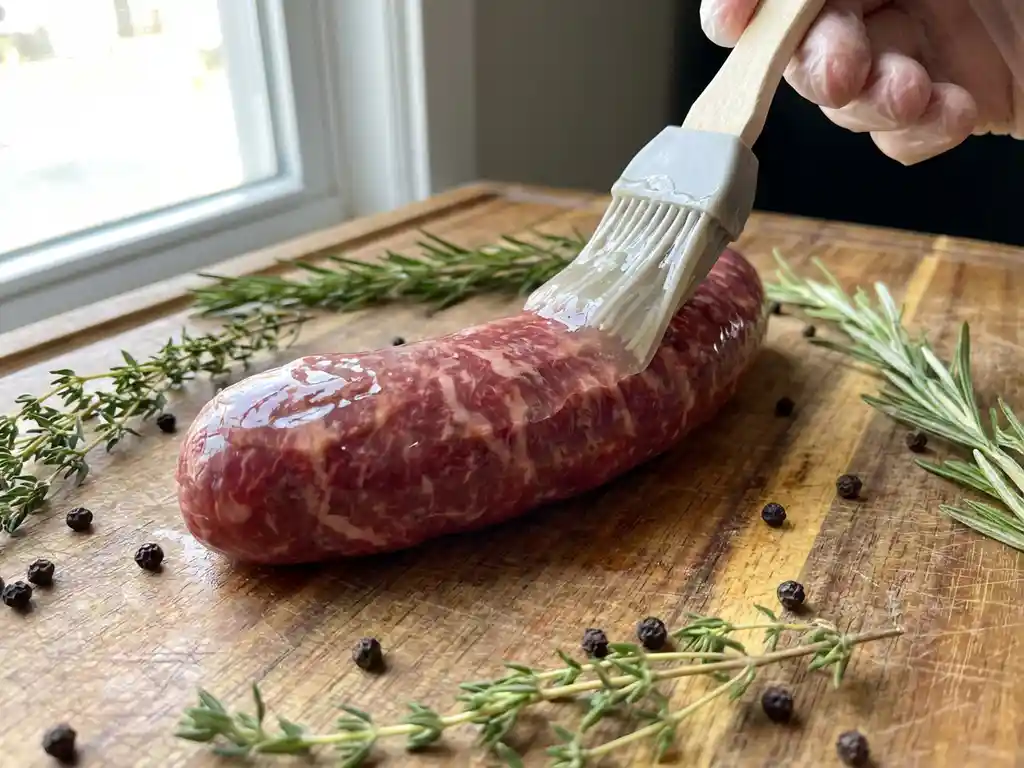
Alginate casing technology plays a crucial role in enhancing the efficiency and sustainability of processed meats. Alginate, derived from seaweed, serves as a plant-based alternative to traditional casings, offering benefits such as improved texture and reduced production costs. It integrates seamlessly into existing production lines, making it an attractive option for manufacturers seeking to optimize their ingredients and reduce costs. This article explores alginate’s importance, its role in ingredient optimization, and how it contributes to sustainability in the meat industry.
What is alginate, and why is it important in processed meats?
Alginate is a seaweed-derived compound used extensively as a casing in sausage production. Its importance lies in its ability to replace traditional casings, such as collagen, while maintaining the desired texture and appearance of sausages. This plant-based casing is especially valued for its compatibility with high-speed production lines, facilitating efficient manufacturing processes. As a result, alginate enhances the scalability of sausage production, meeting growing demand for both meat and plant-based sausages in the processed-meat industry.
How does alginate contribute to ingredient optimization?
Alginate contributes significantly to ingredient optimization by improving the cost-effectiveness and scalability of meat products. Its use as a casing reduces dependence on traditional animal-based casings, which can fluctuate in cost and availability. Alginate’s stability and ease of use in co-extrusion processes also enhance production efficiency, allowing manufacturers to produce sausages consistently and at a lower cost. By incorporating alginate, food producers can streamline their operations while maintaining product quality, achieving significant cost reductions.
What are the benefits of using alginate in meat processing?
Using alginate in meat processing offers several advantages:
- Sustainability: Alginate is derived from renewable seaweed sources, reducing reliance on animal-based casings.
- Improved texture: Alginate casings provide a desirable bite and texture, similar to traditional options.
- Production efficiency: Its compatibility with high-speed, continuous production lines boosts operational efficiency.
These benefits make alginate a preferred choice for manufacturers aiming to innovate and improve their processed meat products.
How does Vaess utilize alginate technology?
As a leader in alginate technology, we drive innovation in the meat processing industry by offering advanced solutions that enhance product quality and production efficiency. Our proprietary AgerGel range supports various applications, including fresh, cooked, and dried sausages. Vaess helps producers:
- Boost factory output
- Reduce labor dependence
- Cut costs and minimize waste
To explore how Vaess can help optimize your sausage production, contact us today.
How can alginate improve the sustainability of meat products?
Alginate improves the sustainability of meat products by offering an eco-friendly alternative to traditional casings. Sourced from seaweed, alginate is entirely plant-based, reducing the environmental impact associated with animal-derived casings. Its use also minimizes waste in production processes, aligning with industry trends toward sustainable practices. By adopting alginate, manufacturers can contribute to greener production methods while meeting consumer demand for sustainable food solutions.
In conclusion, alginate casing technology is pivotal in advancing the efficiency and sustainability of processed meats. Through its numerous benefits, it not only optimizes production but also aligns with the industry’s shift toward eco-friendly practices. For those interested in enhancing their production processes, exploring alginate’s potential with Vaess could be a valuable step forward. Vaess: food for tomorrow.
Gerelateerde artikelen
- What internal stakeholder alignment is needed before a sausage producer switches from natural to alginate casings?
- What is the extrusion process and how does it give alternative proteins a meat-like texture?
- How can alginate be used to develop new sausage formats that collagen casings cannot support?
- What are the peelability requirements for alginate casings in automated peeling lines?
- How do alginate casings perform in frozen product lines?