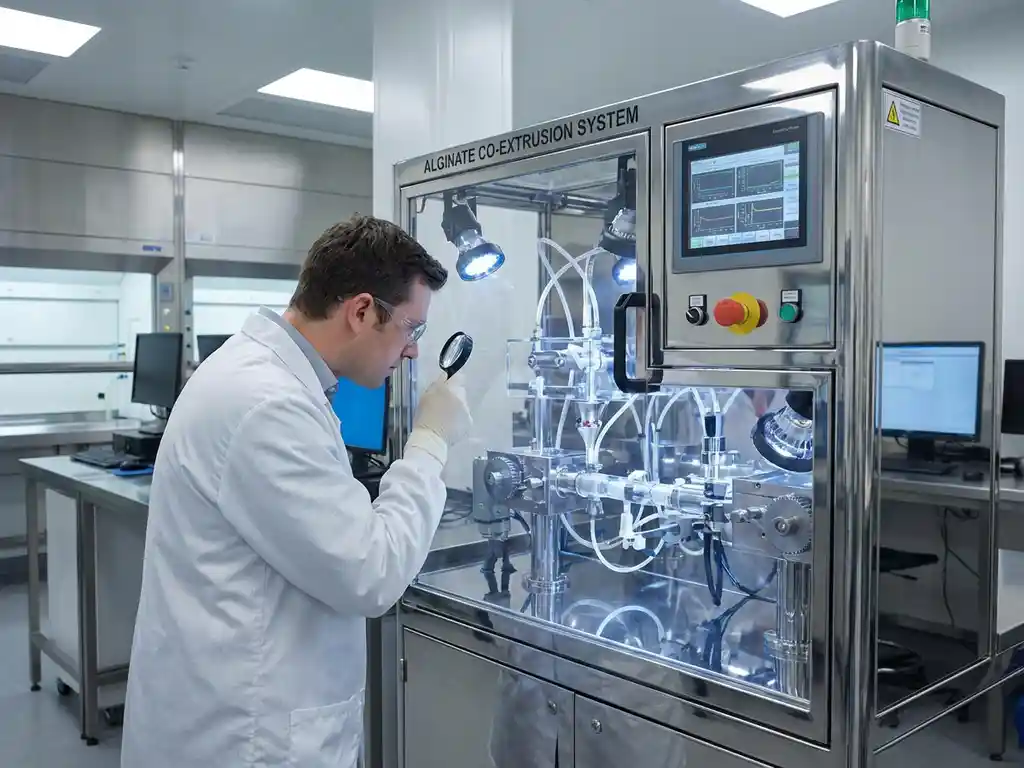
Introducing alginate co-extrusion to a facility requires comprehensive staff training to ensure seamless integration and optimal productivity. Alginate co-extrusion is a process that uses seaweed-derived alginate to replace traditional casings in sausage production, improving product quality and operational efficiency. This article explores the key aspects of staff training necessary for implementing this innovative technology and addresses common questions to guide you through the process.
What is alginate co-extrusion?
Alginate co-extrusion is a food production process that uses alginate casings, a plant-based alternative derived from seaweed, to encase sausage meat. This technology enhances production efficiency by enabling continuous, high-speed processing while maintaining the texture and appearance of traditional casings. By using alginate, producers can reduce costs and reliance on manual labor, making it a valuable addition to modern food engineering practices, crucial for cost reduction in the food industry.
Why is staff training essential when introducing alginate co-extrusion?
Staff training is crucial when implementing alginate co-extrusion to ensure that employees are proficient in handling new equipment and processes. Understanding alginate technology enables seamless integration into existing operations, minimizing disruptions and enhancing productivity. Proper training ensures that staff can effectively manage the alginate vs. natural casing differences, optimizing production outcomes and maintaining product quality.
How does the training process for alginate co-extrusion work?
The training process for alginate co-extrusion involves several key steps:
- Equipment handling: Familiarizing staff with the machinery and its operation.
- Safety protocols: Ensuring adherence to safety standards to prevent accidents.
- Quality assurance: Teaching staff how to maintain product consistency.
- Ongoing support: Providing continuous learning opportunities to adapt to updates.
This structured approach helps staff transition efficiently to the new technology, ensuring a smooth operational shift.
What challenges might arise during training for alginate co-extrusion?
Training for alginate co-extrusion may involve challenges such as resistance to change, technical difficulties, and the need for ongoing education. Staff might initially struggle with the shift from collagen casing vs. alginate casing methods, requiring patience and support. Continuous learning and adaptation are key to overcoming these hurdles, ensuring long-term success in using alginate technology.
Hoe Vaess helpt met training voor alginate co-extrusion
At Vaess, we provide comprehensive support to facilities implementing alginate co-extrusion. Our services include:
- Expert guidance: Tailored advice from our experienced professionals.
- Training sessions: Hands-on training to ensure staff proficiency.
- Ongoing support: Continuous assistance to adapt to technological advancements.
Engage with Vaess to explore how our solutions can enhance your facility’s efficiency and product quality. Contact us for tailored guidance and support.
In conclusion, integrating alginate co-extrusion into your facility can significantly enhance product quality and operational efficiency while addressing the critical theme of cost reduction in the food industry. By ensuring comprehensive staff training and addressing potential challenges, your facility can seamlessly adopt this innovative technology. Connect with Vaess to explore additional solutions and support on your journey toward advanced food engineering and ‘food for tomorrow’.
Veelgestelde vragen
What are the cost implications of implementing alginate co-extrusion?
The initial investment in equipment and training for alginate co-extrusion can be significant, but it often leads to reduced production costs in the long run due to increased efficiency and lower reliance on manual labor. Additionally, the use of alginate casings can lower material costs compared to traditional casings.
How does alginate co-extrusion impact product shelf life?
Alginate casings can enhance the shelf life of products by providing a consistent barrier that helps retain moisture and prevent spoilage. This can be especially beneficial for producers looking to extend the distribution range of their products.
Can alginate co-extrusion be used for products other than sausages?
Yes, alginate co-extrusion can be adapted for other food products that require a casing, such as vegetarian sausages and certain types of confectionery. Its versatility makes it a useful technology for various food production applications.
What environmental benefits does alginate co-extrusion offer?
Alginate is derived from seaweed, a renewable resource, making it a more sustainable option compared to animal-derived casings. Additionally, alginate production has a lower carbon footprint, contributing to more environmentally friendly food manufacturing processes.
How long does staff training for alginate co-extrusion typically take?
The duration of staff training can vary depending on the facility’s size and the complexity of the production line, but it generally takes a few weeks to ensure proficiency. Continuous learning and adaptation to new updates are also part of the training process.
Gerelateerde artikelen
- What is the total cost of ownership of alginate casings vs. collagen casings at scale?
- What sustainability claims can food manufacturers make when using alginate casings?
- How does alginate perform in plant-based and meat analog product development?
- What competitive advantage does alginate casing technology offer over conventional casings?
- What role does alginate play in the development of portion-controlled formed meat products?