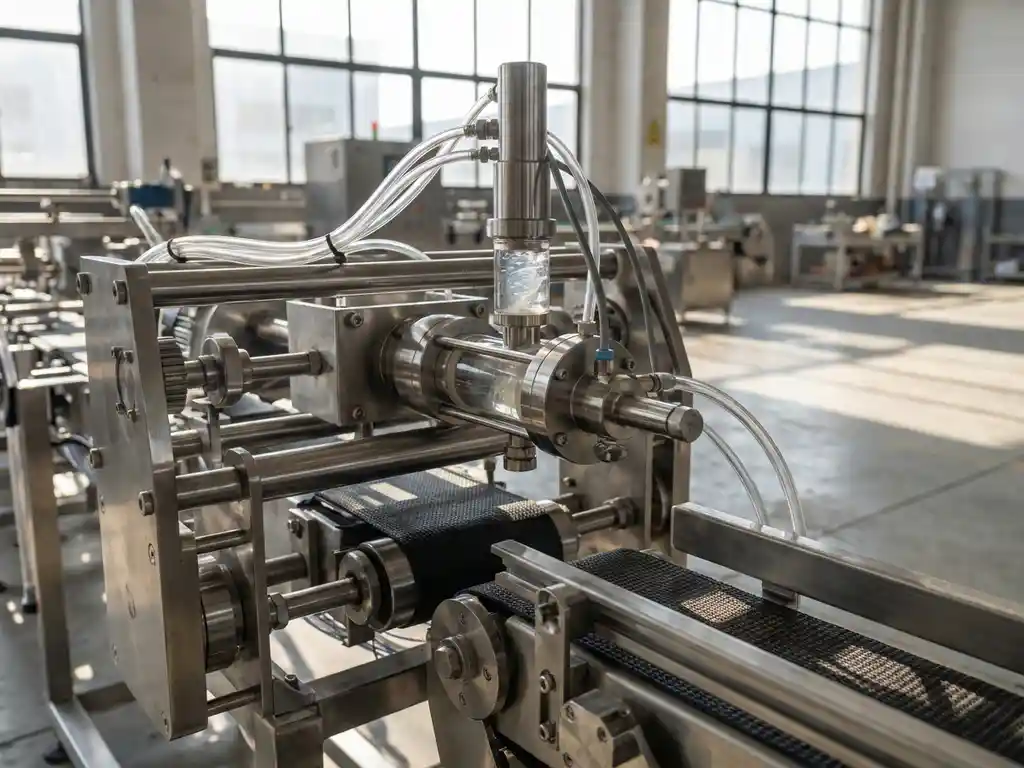
Implementing alginate co-extrusion in existing plants requires specific equipment upgrades to accommodate this innovative technology. Alginate co-extrusion involves using seaweed-based casings for sausages, offering a sustainable and efficient alternative to traditional casings. This article explores the necessary equipment, benefits, and challenges of integrating alginate co-extrusion, as well as how Vaess can assist with this transition.
What is alginate co-extrusion?
Alginate co-extrusion is a process used in food production, particularly for creating sausage casings. It involves the simultaneous extrusion of a meat- or plant-based filling and an alginate gel, which forms the casing instantaneously upon contact with a calcium solution. This method is widely used due to its efficiency and its ability to produce consistent, high-quality casings. Alginate casings are plant-based, making them suitable for vegan, halal, and kosher products.
How does alginate co-extrusion benefit existing plants?
Integrating alginate co-extrusion into current food production facilities offers several advantages. It enhances production efficiency by reducing reliance on labor-intensive processes and minimizing casing waste. The technology provides consistent casing quality and improves operational speed, allowing for high-volume production. Additionally, alginate casings are cost-effective compared to collagen casings, offering savings on materials and production costs, thus supporting cost reduction in the food industry.
What equipment is needed for alginate co-extrusion?
To implement alginate co-extrusion, facilities need specific equipment, including:
- Co-extrusion machines: These are designed to extrude both the filling and the alginate casing simultaneously.
- Calcium bath or spray systems: Essential for setting the alginate gel and forming the casing’s structure.
- Pumps and mixers: Necessary for preparing and transporting the alginate solution.
- Control systems: For monitoring and adjusting the extrusion process to ensure consistency and quality.
Existing machinery may require modifications to integrate these components seamlessly.
How can Vaess assist in implementing alginate co-extrusion?
Vaess provides comprehensive support in adopting alginate co-extrusion technology:
- Customized solutions tailored to specific plant needs.
- Access to alginate casing sausage technology and expertise.
- On-site training and technical support to ensure smooth implementation.
- Partnership opportunities for ongoing innovation and improvement.
Contact us to explore how our solutions can enhance your production capabilities and contribute to cost-effective ‘food for tomorrow’.
What challenges might arise with alginate co-extrusion?
Implementing alginate co-extrusion can present challenges such as:
- Equipment compatibility: Ensuring new systems integrate with existing machinery.
- Staff training: Educating personnel on new processes and equipment.
- Quality control: Maintaining consistent product quality during transition phases.
Addressing these challenges involves careful planning, thorough training, and leveraging expert support from partners like Vaess.
How to maintain equipment for alginate co-extrusion?
Regular maintenance is crucial to ensuring the longevity and performance of alginate co-extrusion equipment. Key maintenance practices include:
- Routine cleaning of extrusion nozzles and calcium baths to prevent blockages.
- Regular calibration of control systems to maintain accuracy in production.
- Scheduled inspections to detect wear and tear early, allowing for timely repairs.
Following these maintenance guidelines helps maintain the efficiency and effectiveness of your production line.
In summary, integrating alginate co-extrusion into existing facilities offers numerous benefits, from enhanced efficiency to cost savings. While the transition involves specific equipment and potential challenges, Vaess provides the expertise and support needed for successful implementation. To learn more about how we can assist, contact us today and be part of ‘food for tomorrow’.
Gerelateerde artikelen
- What technical support should an alginate casing supplier provide during initial line integration?
- Why are legumes considered one of the most sustainable sources of alternative protein?
- What is the total cost of ownership of alginate casings vs. collagen casings at scale?
- What certifications are required to market alginate-cased sausages as plant-based?
- How do you assess the consistency of alginate casing performance across production batches?