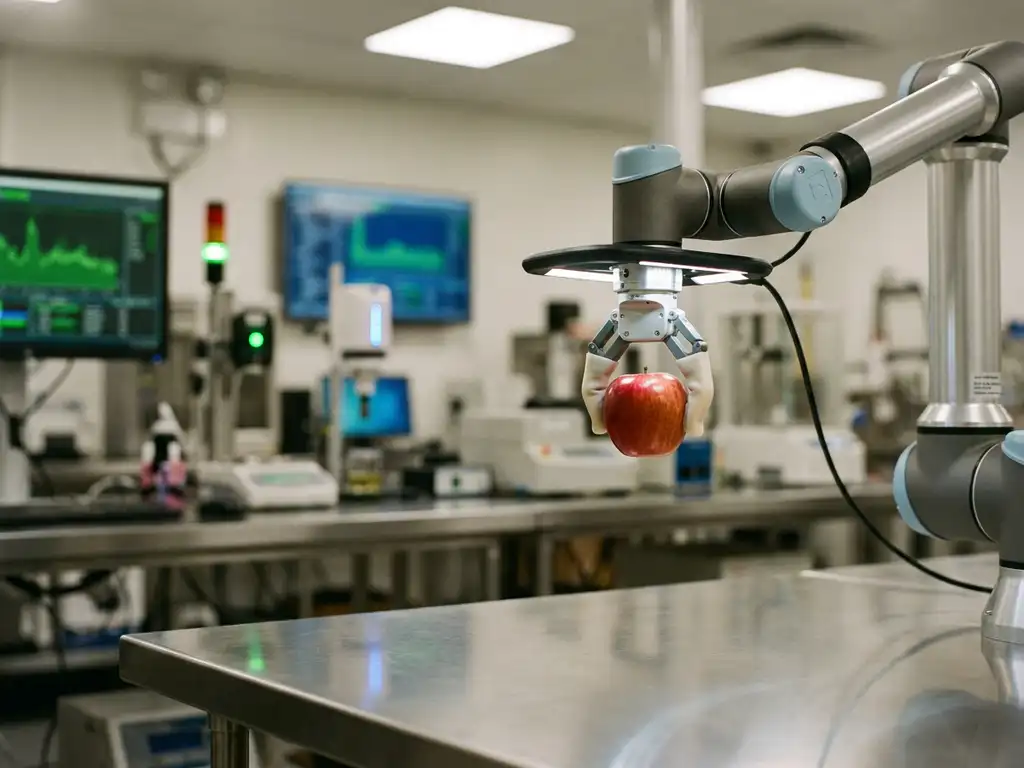
Machine learning is revolutionizing quality control and predictive formulation in modern food manufacturing by enabling more precise and efficient processes. This technology helps manufacturers enhance the consistency and quality of their products while reducing waste and optimizing resource usage. By integrating machine learning, food manufacturers can better meet consumer demands for innovative and sustainable products. In this article, we will explore how machine learning is integrated into food manufacturing, improving quality control, transforming predictive formulation, and the overall benefits it offers. For more insights into industry-specific applications, visit our industries page.
What is machine learning in food manufacturing?
Machine learning in food manufacturing involves using algorithms and statistical models to analyze data and improve production processes. This technology learns from data patterns to make predictions and automate decision-making, which enhances efficiency and product quality. By processing large volumes of data, machine learning helps manufacturers optimize recipes, streamline operations, and predict maintenance needs.
In the food industry, machine learning applications range from ingredient sourcing to final product delivery. It assists in developing new products, maintaining consistent quality, and ensuring food safety. This technology is essential for staying competitive in a rapidly evolving market, where consumer preferences and regulatory requirements are constantly changing. Learn more about our approach at Our Essence.
How does machine learning improve quality control?
Machine learning improves quality control by enabling real-time monitoring and analysis of production processes. It identifies anomalies and defects early, reducing waste and ensuring consistent product quality. By predicting potential issues before they occur, machine learning helps manufacturers maintain high standards and comply with regulatory requirements.
Quality control benefits from machine learning through enhanced data collection and analysis capabilities. Sensors and cameras collect data throughout the production process, which machine learning algorithms analyze to detect variations. This proactive approach not only improves product quality but also boosts operational efficiency by minimizing downtime and reducing the need for human intervention.
How is predictive formulation changing food manufacturing?
Predictive formulation in food manufacturing uses machine learning to create optimized recipes by analyzing ingredient interactions and consumer preferences. This approach allows manufacturers to develop products that meet specific nutritional, taste, and texture criteria. By leveraging predictive formulation, manufacturers can innovate rapidly and respond to market trends.
Through predictive formulation, machine learning enables the creation of hybrid food innovations, blending traditional and plant-based ingredients to meet consumer demand for healthier, sustainable products. This technology helps manufacturers develop new products more efficiently, reducing time-to-market and increasing competitiveness in the food industry.
What are the benefits of using machine learning in food manufacturing?
Machine learning offers numerous benefits in food manufacturing, including enhanced efficiency, improved product consistency, and reduced costs. By automating data analysis and decision-making, machine learning frees up human resources for more strategic tasks, leading to greater innovation and competitiveness.
Some key benefits include:
- Improved efficiency: Automating routine tasks and using predictive maintenance reduce downtime.
- Consistent quality: Real-time monitoring ensures products consistently meet quality standards.
- Cost reduction: Optimized resource usage and minimized waste lower production costs.
- Faster innovation: Predictive formulation accelerates the development of new products.
How does Vaess help with transforming quality control and predictive formulation?
At Vaess, we leverage machine learning to enhance quality control and predictive formulation in food manufacturing. Our approach involves:
- Utilizing advanced algorithms to identify and address production anomalies swiftly.
- Implementing predictive maintenance strategies to minimize equipment downtime.
- Integrating predictive formulation to innovate hybrid food products.
- Collaborating with partners to tailor solutions that meet specific production needs.
By partnering with Vaess, food manufacturers gain access to cutting-edge technology and expertise that drive innovation and efficiency. Contact us today to learn how we can help you optimize your production processes.
Gerelateerde artikelen
- What are the innovation of food technology?
- How do alginate casings affect the clean label profile of a sausage product?
- What operational risks arise when transitioning from collagen to alginate casings?
- What are the peelability requirements for alginate casings in automated peeling lines?
- How does alginate casing shrinkage compare to collagen during heat treatment?