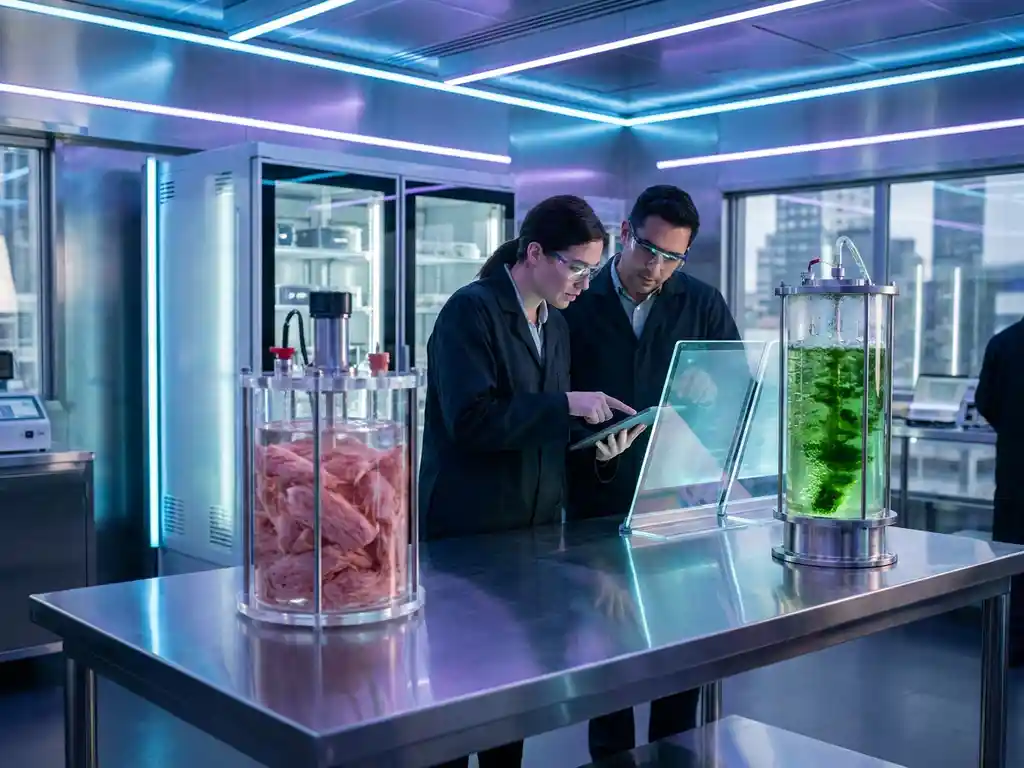
Cellular agriculture and novel proteins are poised to revolutionize global supply chain infrastructure by introducing sustainable, efficient, and scalable food production methods. These innovations reduce reliance on traditional agriculture, thereby minimizing environmental impact and enhancing food security. As the demand for sustainable food alternatives grows, these technologies offer viable solutions for the future. This article will explore how these advancements contribute to food sustainability, the challenges they face, and their impact on global supply chains. Learn more about the industries we serve at Vaess Industries.
What is cellular agriculture and how does it work?
Cellular agriculture is a cutting-edge approach to food production that involves cultivating cells to create food products, such as meat, dairy, and eggs, without the need to raise animals. This process typically involves extracting cells from an animal and placing them in a controlled environment where they are fed nutrients to grow and multiply. Over time, these cells form the desired food product, mimicking the taste and texture of traditionally sourced foods.
This innovative method offers several advantages. It reduces the need for land, water, and feed resources associated with conventional livestock farming. Importantly, it also significantly lowers greenhouse gas emissions. As a result, cellular agriculture is considered a key player in the quest for sustainable food production. Discover more about our essence and commitment to sustainability at Our Essence.
How do novel proteins contribute to food sustainability?
Novel proteins, such as those derived from plants, insects, and fermentation processes, contribute to food sustainability by offering alternative sources of nutrition that require fewer environmental resources. These proteins can be produced with less land, water, and energy, and they generate fewer emissions compared to traditional animal-based proteins.
For instance, plant-based proteins are derived from crops like peas, soy, and rice, which can be cultivated with lower environmental impact. Fermentation-based proteins, like those from yeast or bacteria, offer another sustainable option by using fermentation processes to produce protein-rich ingredients. These novel proteins are integral to hybrid food innovations, combining traditional and plant-based ingredients to create diverse and sustainable food products.
What are the challenges faced by cellular agriculture in the supply chain?
Despite its potential, cellular agriculture faces several challenges in integrating into existing supply chains. One significant hurdle is the high cost of production, largely due to the need for specialized equipment and nutrients for cell growth. Scaling up production to meet global demand while maintaining affordability remains a critical challenge.
Regulatory approval is another obstacle, as new food technologies must meet stringent safety and labeling standards before reaching the market. Public perception also plays a role; consumer acceptance of lab-grown foods requires effective communication of their benefits and safety. Addressing these challenges is crucial for cellular agriculture to fulfill its promise of sustainable food production.
How does cellular agriculture impact global supply chains?
Cellular agriculture has the potential to reshape global supply chains by decentralizing food production and reducing reliance on traditional farming. By producing food in controlled environments, this technology can localize production, minimizing transportation needs and associated emissions.
Furthermore, cellular agriculture enhances food security by mitigating risks associated with climate change and resource scarcity. It provides a stable and reliable food source that is less vulnerable to environmental disruptions. This shift towards more resilient and sustainable supply chains aligns with global efforts to ensure food availability for growing populations.
How does Vaess help redefine global supply chain infrastructure?
At Vaess, we are committed to driving food innovation and redefining global supply chain infrastructure through our pioneering hybrid food innovations. Here’s how we contribute:
- Hybrid Innovation Strategies: By merging plant-based and traditional proteins, we create innovative products that cater to diverse consumer needs.
- Scalable Solutions: Our building block principle ensures each product achieves the right balance of texture and taste, making them commercially scalable.
- Technological Leadership: We provide expertise in alginate technology and functional proteins, supporting sustainable food production across various sectors.
Vaess is dedicated to collaborating with partners to engineer the future of food. Reach out to us to discover how our solutions can enhance your supply chain and meet evolving consumer demands.
Gerelateerde artikelen
- Are alternative proteins nutritionally complete enough to fully replace animal protein in your diet?
- What is the extrusion process and how does it give alternative proteins a meat-like texture?
- How do you optimize alginate bath concentration for consistent casing formation at speed?
- How do alginate casings affect yield and waste reduction in sausage production?
- What is the no. 1 healthiest food in the world?