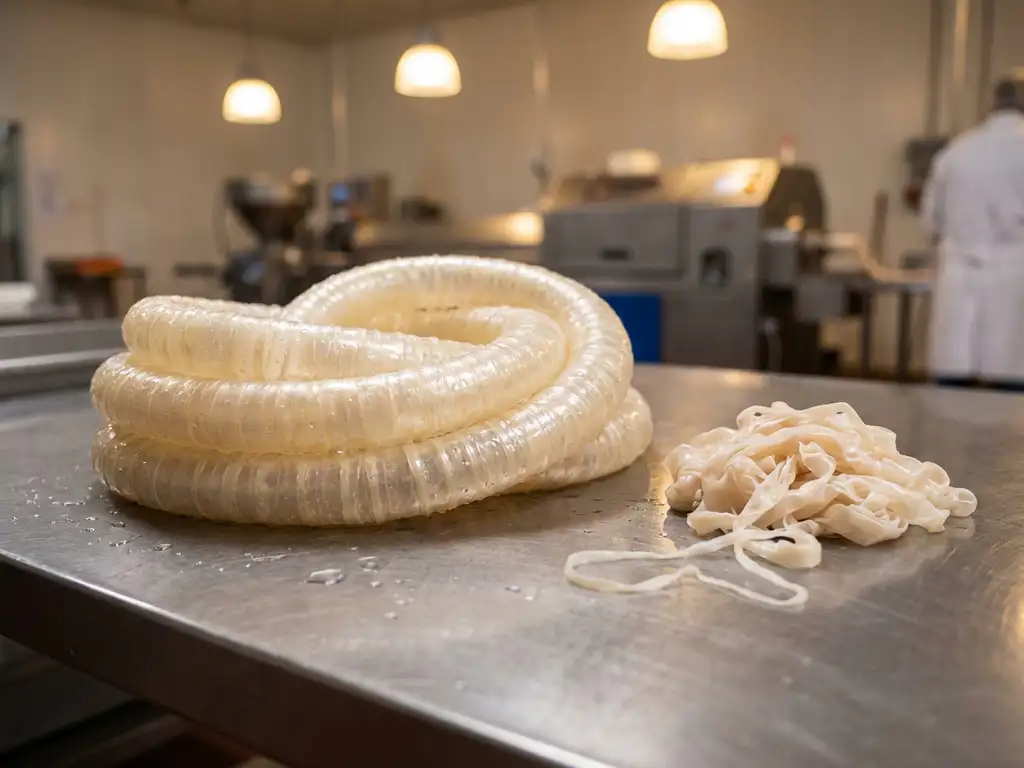
Collagen casings can toughen during processing due to factors such as temperature fluctuations, variations in moisture content, and extended processing times. These factors affect the casing’s texture, making it less pliable and more difficult to use in sausage production. Understanding these variables is crucial for maintaining quality and achieving cost reduction in the food industry, especially when scaling up production. In this article, we’ll examine these factors and discuss how alginate sausage casings offer a viable alternative, improving both production efficiency and product consistency.
What causes collagen casings to toughen during processing?
Collagen casings typically toughen during processing due to temperature fluctuations, moisture content, and processing time. High temperatures can dehydrate the casing, while low temperatures can cause it to contract and harden. Similarly, insufficient moisture can make the casing brittle. Extended processing times expose the casing to these conditions for longer periods, increasing toughness. Maintaining consistent processing conditions is essential to preserve the desired texture and achieve cost-efficiency.
How can the toughness of collagen casings be prevented at scale?
To prevent collagen casings from toughening at scale, it’s essential to implement precise industrial processing techniques and robust quality control measures. This includes maintaining consistent temperature and humidity levels throughout the production process. Regularly monitoring and adjusting these parameters helps preserve the casing’s pliability. Additionally, automated systems can help ensure uniform processing conditions, reducing the likelihood of inconsistencies in casing texture and supporting cost reduction strategies.
What role does moisture content play in collagen casing toughness?
Moisture content is crucial in determining the toughness of collagen casings. Insufficient moisture can lead to brittleness, while excessive moisture can weaken the casing’s structural integrity. Maintaining optimal moisture levels helps ensure the casing remains flexible and easy to handle. This balance is especially important in large-scale production, where uniformity and cost-effectiveness are key. Regular moisture assessments can help maintain these optimal conditions.
How does temperature affect the processing of collagen casings?
Temperature plays a significant role in the processing of collagen casings. High temperatures can cause the casing to dry out and become tough, while low temperatures may lead to shrinkage and hardening. Precise temperature control is essential to maintain the desired texture and flexibility of the casing. Implementing automated temperature monitoring and control systems can help achieve consistent results, minimizing the risk of casing damage during processing, and contributing to cost reduction.
How Vaess helps with alginate casings
At Vaess, we offer alginate casing solutions that address the challenges associated with collagen casings. Our expertise in alginate technology provides a plant-based alternative that is both durable and flexible. Benefits of alginate casings include:
- Consistent texture and flexibility across batches
- Reduced processing time due to compatibility with high-speed co-extrusion
- Cost-effective and sustainable production, aligning with our “food for tomorrow” ethos
Our alginate solutions not only improve product quality but also enhance production efficiency, supporting cost reduction strategies in the food industry. To learn more about how we can support your operations, contact us today.
In conclusion, understanding the factors that cause collagen casings to toughen can help optimize production processes and reduce costs. By maintaining precise control over temperature and moisture levels, and considering alternatives such as alginate casings, producers can ensure consistent, high-quality sausage products. For more insights and solutions, reach out to Vaess—your partner in innovative food engineering.
Gerelateerde artikelen
- What traceability documentation is required for natural casings that alginate suppliers can more easily provide?
- How does alginate casing technology affect throughput on high-speed filling lines?
- How does switching to alginate casings support corporate sustainability targets?
- How much downtime should a facility expect when retrofitting an existing packaging line with modified atmosphere technology?
- What are the smoke permeability differences between alginate, collagen, and natural casings?