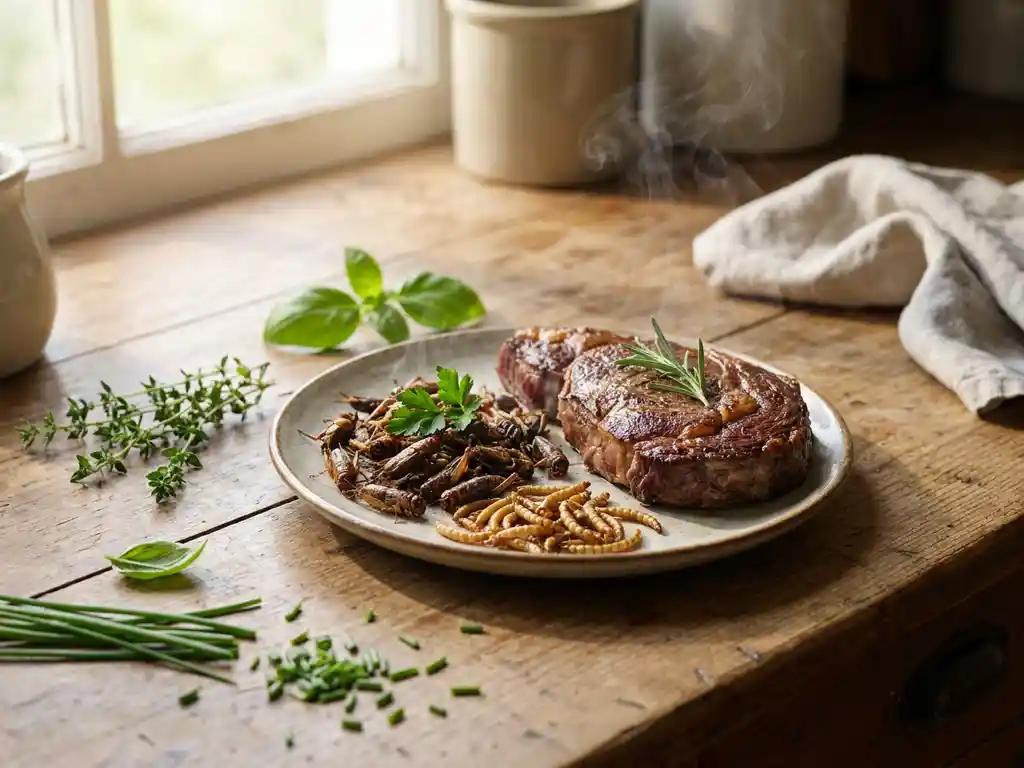
Insect protein has a significantly lower environmental impact compared to traditional meat production. It requires less land and water, and it emits fewer greenhouse gases. This makes it an appealing alternative as the world seeks sustainable food sources. Insect farming is efficient and offers a viable solution to meet the growing demand for protein while minimizing ecological footprints. In this article, we explore how insect protein stacks up against traditional meat, its nutritional benefits, dietary incorporation, industry challenges, and how we at Vaess contribute to sustainable protein solutions. For more insights into our industry focus, visit our industries page.
What is insect protein and how is it produced?
Insect protein is derived from insects like crickets, mealworms, and black soldier flies. These insects are mass-reared on farms and processed into protein-rich powders or whole foods. The production process involves feeding insects organic waste, harvesting them, and then drying or grinding them into powder. This method is efficient and environmentally friendly, using minimal resources and providing a rich source of protein.
Insect farming is scalable and can be tailored to various environments, making it adaptable to different agricultural settings. The process is not only sustainable but also closed-loop, as insects can be fed organic waste, reducing landfill use and contributing to a circular economy.
How does the environmental impact of insect protein compare to traditional meat?
Insect protein production has a much lower environmental impact than traditional meat. It uses less land and water and produces significantly fewer greenhouse gases. For example, crickets require only about 1.7 kg of feed to produce 1 kg of protein, compared to cattle, which need about 8 kg of feed. This efficiency makes insect protein a sustainable choice for reducing the ecological impact of the protein industry.
Moreover, insect farming can thrive on organic waste, reducing the need for dedicated feed crops and further minimizing environmental strain. This eco-friendly approach aligns with global efforts to combat climate change and ensure food security for a growing population.
What are the nutritional benefits of insect protein?
Insect protein is highly nutritious, offering a complete amino acid profile, essential vitamins, and minerals. It is rich in protein, often exceeding 60% by dry weight, and provides healthy fats, including omega-3 and omega-6 fatty acids. This makes it comparable to traditional animal proteins in terms of nutrition.
Insects also contain significant levels of fiber and micronutrients such as iron, zinc, and calcium. These nutrients are crucial for maintaining health and can enhance dietary diversity, particularly in regions where certain micronutrient deficiencies are prevalent.
How can insect protein be incorporated into diets?
Insect protein can be incorporated into diets in various forms, such as protein bars, shakes, or as an ingredient in baked goods. It can also be used as a meat substitute in dishes like burgers and sausages. The mild flavor of insect protein allows it to blend seamlessly into many recipes without altering the taste profile significantly.
For those new to insect protein, starting with products that incorporate it subtly, like protein powders or snacks, is recommended. This gradual introduction helps consumers become accustomed to the idea of insects as a food source, paving the way for broader acceptance.
What challenges does the insect protein industry face?
The insect protein industry faces challenges such as consumer acceptance, regulatory hurdles, and scalability. Overcoming the “yuck” factor is crucial for wider adoption, requiring educational efforts about the benefits and safety of insect consumption. Regulatory frameworks are still developing, which can slow down product approvals and market entry.
Scaling production to meet global protein demands while maintaining quality and safety standards is another challenge. However, ongoing research and technological advancements are paving the way for overcoming these barriers, making insect protein increasingly viable as a global food resource.
How Vaess helps with sustainable protein solutions
At Vaess, we are committed to providing sustainable protein solutions by integrating innovative technologies and approaches. Our contributions include:
- Leveraging our expertise in food innovation and hybrid foods to blend insect protein with plant-based ingredients for enhanced nutritional profiles.
- Utilizing our extensive knowledge in clean-label solutions to ensure that insect protein products meet consumer demand for transparency and natural ingredients.
- Partnering with industry leaders to scale production and improve the commercial viability of insect protein products.
We invite you to explore our essence and see how Vaess can help you achieve your sustainability goals in food production. For further inquiries, feel free to contact us. Let’s shape the future of food together!
Gerelateerde artikelen
- Why are legumes considered one of the most sustainable sources of alternative protein?
- Are hybrid foods healthy?
- How do alginate casings affect yield and waste reduction in sausage production?
- How does alginate support texture consistency across different protein sources?
- What regulatory changes in the EU are affecting sausage casing material selection?