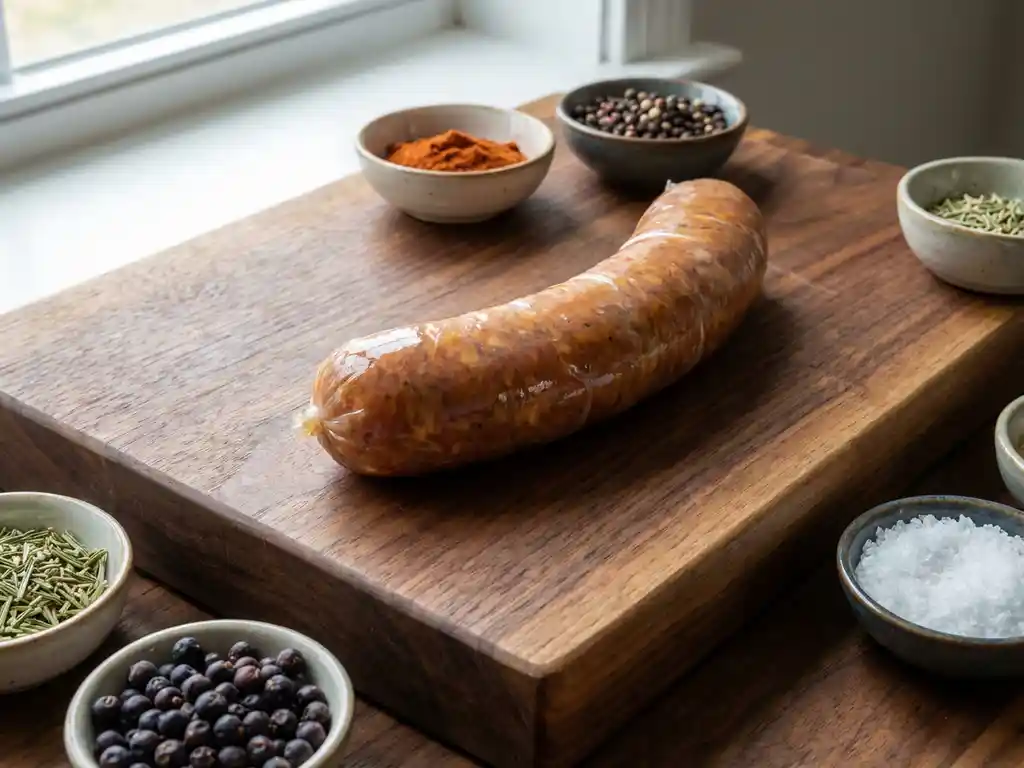
Alginate casing technology, derived from seaweed, is a game-changer in sausage production. It enables the continuous co-extrusion of sausages, offering a 100% plant-based alternative to traditional casings. This technology not only matches the appearance and texture of natural or collagen casings but also improves operational efficiency and cost-effectiveness. In this article, we explore the role of alginate casing in product differentiation, its benefits over traditional casings, and how Vaess supports these innovations. Vaess is committed to providing sustainability and efficiency in food production.
What is alginate casing technology, and how does it work?
Alginate casing technology uses alginate, a seaweed-derived substance, to create a versatile, plant-based casing for sausages. It works through a co-extrusion process in which the alginate gel forms a casing around the sausage meat as it is extruded. This method allows for high-speed production while maintaining the desired texture and appearance of traditional sausage casings. Alginate casings cater to diverse dietary requirements, including halal and vegan options.
Why is product differentiation important in premium segments?
Product differentiation in premium segments is crucial because it helps brands meet the high expectations of discerning consumers. These consumers seek unique qualities such as superior taste, texture, and sustainability. Differentiation provides a competitive edge, enabling brands to stand out in crowded markets and justify higher price points. By offering distinctive features, companies can build brand loyalty and cater to niche markets.
How does alginate casing support product differentiation?
Alginate casing supports product differentiation by allowing manufacturers to create sausages with unique textures, improved flavor retention, and appealing appearances. This flexibility enables producers to innovate with flavors and fillings, meeting the sophisticated tastes of consumers in premium segments. Furthermore, alginate’s plant-based nature aligns with the growing demand for sustainable and ethical products, appealing to eco-conscious customers. As a result, alginate casings contribute to cost reduction in the food industry by enhancing production efficiency and reducing waste.
What’s the difference between alginate casing and traditional casing?
The primary difference between alginate casing and traditional casings lies in their materials and production processes. Alginate casings are plant-based and formed through a co-extrusion process, offering greater production efficiency and flexibility. Unlike natural or collagen casings, alginate is scalable and sustainable, reducing reliance on animal-based materials. This makes alginate a cost-effective and environmentally friendly alternative, suitable for both meat and plant-based sausages.
How Vaess helps with alginate casing
Vaess plays a pivotal role in advancing alginate casing technology by offering comprehensive solutions and innovations. Here’s how we help:
- We provide scalable alginate casing solutions that improve production efficiency.
- Our global expertise supports diverse applications, including meat and plant-based sausages.
- Our alginate technology meets halal, kosher, and vegan requirements.
- We offer ongoing innovation and customer collaboration to meet evolving market demands.
Explore our alginate casing solutions to enhance your product offerings and gain a competitive edge in premium markets. For more personalized assistance, feel free to contact us today. By choosing Vaess, you’re choosing “food for tomorrow” with a focus on sustainability and cost-effectiveness.
Gerelateerde artikelen
- What internal stakeholder alignment is needed before a sausage producer switches from natural to alginate casings?
- How do alginate and natural casings compare in terms of batch-to-batch consistency for industrial buyers?
- How do alginate casing suppliers differ in their approach to custom formulation and application support?
- How does alginate support texture consistency across different protein sources?
- What does the next generation of alginate casing technology look like for industrial use?