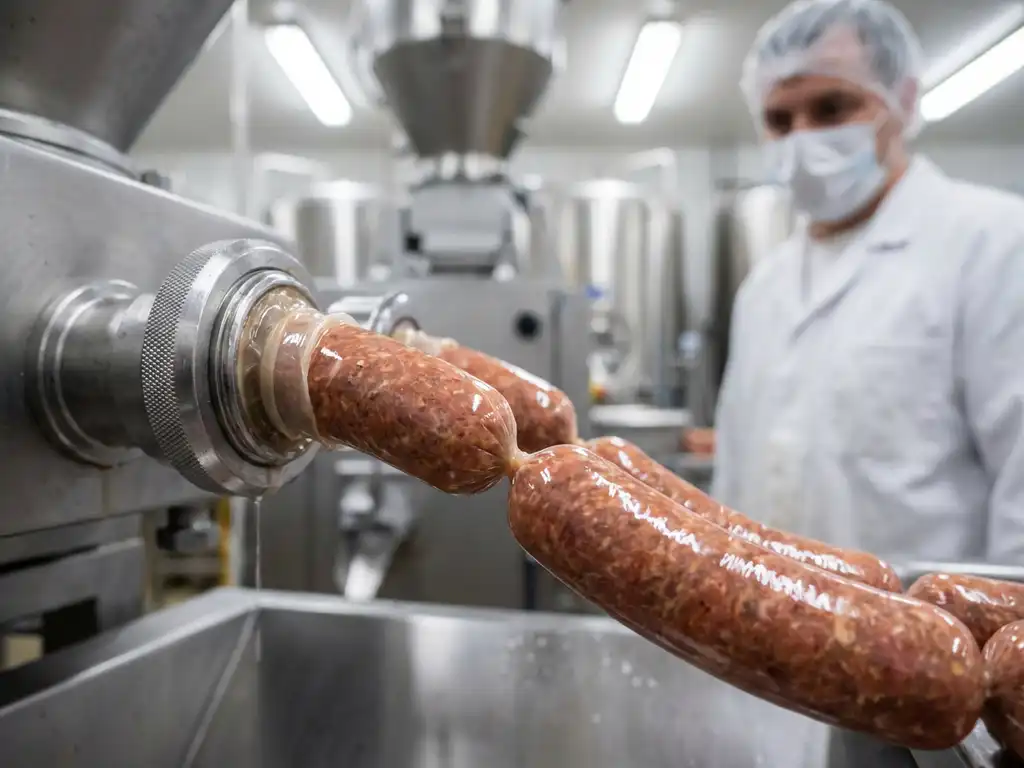
Alginate casings, derived from seaweed, are essential in continuous 24/7 production environments, particularly in sausage processing. These casings facilitate high-speed operations while maintaining product quality and consistency. Unlike natural or collagen casings, alginate offers a plant-based alternative that doesn’t compromise on appearance or texture. This article explores how alginate casings enhance production efficiency, the challenges they face, and strategies to maintain their performance. We will also discuss how Vaess’s innovations in alginate technology help overcome these challenges.
What are alginate casings used for in 24/7 production?
Alginate casings are primarily used in sausage production during continuous 24/7 operations. They enable seamless integration into high-speed co-extrusion lines, making them ideal for mass production. Their application extends beyond sausages to include other food engineering sectors, such as plant-based and fish products. These casings provide a consistent, high-quality alternative to traditional natural and collagen casings, matching them in appearance and texture while remaining cost-effective, thus contributing to cost reduction in the food industry.
How do alginate casings enhance production efficiency?
Alginate casings significantly boost production efficiency by reducing downtime and ensuring product consistency. They are engineered for high-speed operations, which helps maintain a steady workflow and minimize interruptions. This efficiency is further enhanced by the casings’ ability to match the texture and appearance of traditional casings, reducing the need for manual adjustments and quality checks. Additionally, alginate casings contribute to cost savings by minimizing waste and reducing reliance on labor, aligning with the industry’s focus on cost reduction.
What challenges do alginate casings face under continuous use?
Despite their advantages, alginate casings can face challenges such as wear and tear or material degradation in nonstop production settings. Continuous use can lead to issues such as reduced elasticity or brittleness, which may affect the casing’s integrity. The constant demand of high-speed operations can also stress the material, leading to potential failures. Addressing these challenges requires regular quality checks and material assessments to ensure optimal performance.
How to maintain alginate casing performance in 24/7 operations?
Maintaining alginate casing performance in 24/7 operations involves several strategies:
- Regular quality control checks to monitor casing condition and performance
- Implementing maintenance schedules to address wear and tear proactively
- Using high-quality alginate materials that can withstand continuous use
- Training staff in proper handling and usage techniques to extend casing life
These practices help ensure consistent production quality and minimize downtime, further supporting cost reduction initiatives.
How Vaess helps with alginate casings
Vaess provides solutions that address the challenges of continuous production with alginate casings. Our innovations enhance casing durability and efficiency, ensuring high performance in demanding environments. Key offerings include:
- Proprietary AgerGel range for optimal casing strength and flexibility
- Comprehensive support from our Food Technology Centres for testing and development
- Expert guidance on integrating alginate solutions into existing operations
For more information, contact us to discover how Vaess can support your production needs.
In summary, alginate casings offer a robust solution for 24/7 production environments, enhancing efficiency and product quality. By addressing potential challenges and maintaining performance, manufacturers can leverage these casings for optimal results. Vaess’s expertise in alginate technology provides reliable support, making us a trusted partner in your continuous production journey.
Gerelateerde artikelen
- How do you assess an alginate casing supplier's capacity to scale with your production growth?
- How are food scientists improving plant-based proteins to contain all essential amino acids?
- What are the main challenges in producing algae-based protein at a large scale?
- What are the four areas of food innovation?
- How do alginate casings perform in frozen product lines?