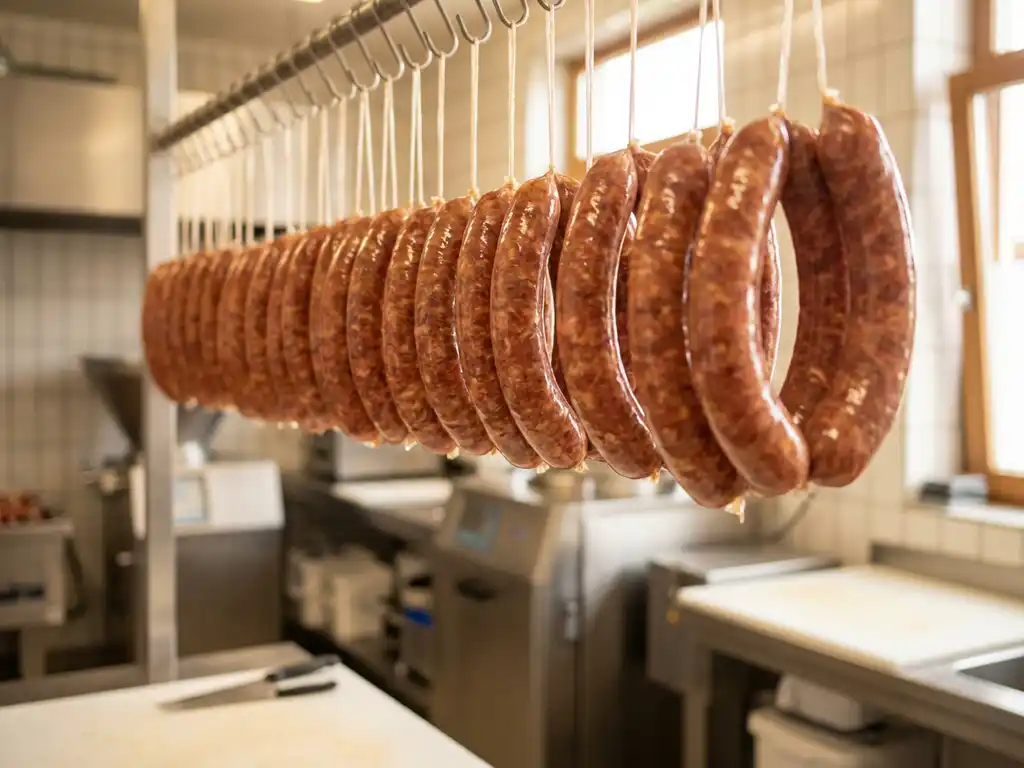
Alginate casing quality significantly impacts caliber consistency in automated sausage lines by ensuring a uniform sausage diameter and seamless production. This consistency is crucial for maintaining product quality, operational efficiency, and cost reduction in the food industry. In this article, we explore what alginate casing is, why it matters, and how its quality influences caliber consistency. We also discuss the factors that affect quality and the benefits for automated lines, concluding with how Vaess addresses alginate casing challenges.
What is alginate casing, and why is it important for sausage production?
Alginate casing, a seaweed-derived alternative to traditional casings, is essential in modern sausage production. It offers several benefits over natural and collagen casings, including being 100% plant-based, which makes it suitable for a wide range of dietary requirements. Alginate casing provides a consistent appearance, bite, and texture, enhancing sausage quality across meat, plant-based, halal, and kosher applications. Thanks to its adaptability, alginate casing supports high-speed, continuous co-extrusion lines, boosting efficiency and contributing to cost savings in sausage production.
How does alginate casing quality influence caliber consistency?
The quality of alginate casing directly affects the uniformity of sausage caliber (the sausage’s diameter). High-quality casings ensure consistent size and shape, which is critical for automated sausage lines where precision is key. This consistency helps maintain product quality, reduces waste, and improves operational efficiency, ultimately leading to significant cost reductions. Poor-quality casings may lead to irregular sizes, causing production delays and increased waste.
What factors affect the quality of alginate casing?
Several factors determine the quality of alginate casings, including raw material sourcing and production techniques. The purity and consistency of the seaweed used can greatly affect the casing’s properties. Advanced production techniques ensure the alginate gel meets strict standards for strength and elasticity. Robust quality control processes are vital to maintaining the high standards required for efficient sausage production.
How can automated sausage lines benefit from high-quality alginate casings?
Automated sausage lines gain significant advantages from high-quality alginate casings. These casings contribute to:
- Improved efficiency by reducing stoppages and adjustments
- Waste reduction through consistent caliber and reduced material loss
- Enhanced product quality, ensuring consumer satisfaction
- Cost savings by minimizing labor and material expenses
By integrating superior alginate casings, producers can optimize their operations and enhance their product offerings.
How Vaess helps with alginate casing
At Vaess, we provide innovative solutions to address alginate casing challenges, ensuring top-notch quality and support:
- Advanced technology for consistent, reliable alginate casing production
- Comprehensive quality assurance protocols to maintain high standards
- Dedicated customer support to assist with technical and operational needs
Explore our solutions to improve your sausage production. Contact us today to learn more about how we can support your operations with our commitment to ‘food for tomorrow’.
Gerelateerde artikelen
- What service level agreements are standard when contracting with an alginate casing supplier?
- What contingency planning should procurement teams build around natural casing seasonal availability?
- What are the red flags when evaluating a new alginate casing supplier for large-scale production?
- How do alginate casings help manufacturers respond to retailer sustainability mandates?
- What are the peelability requirements for alginate casings in automated peeling lines?