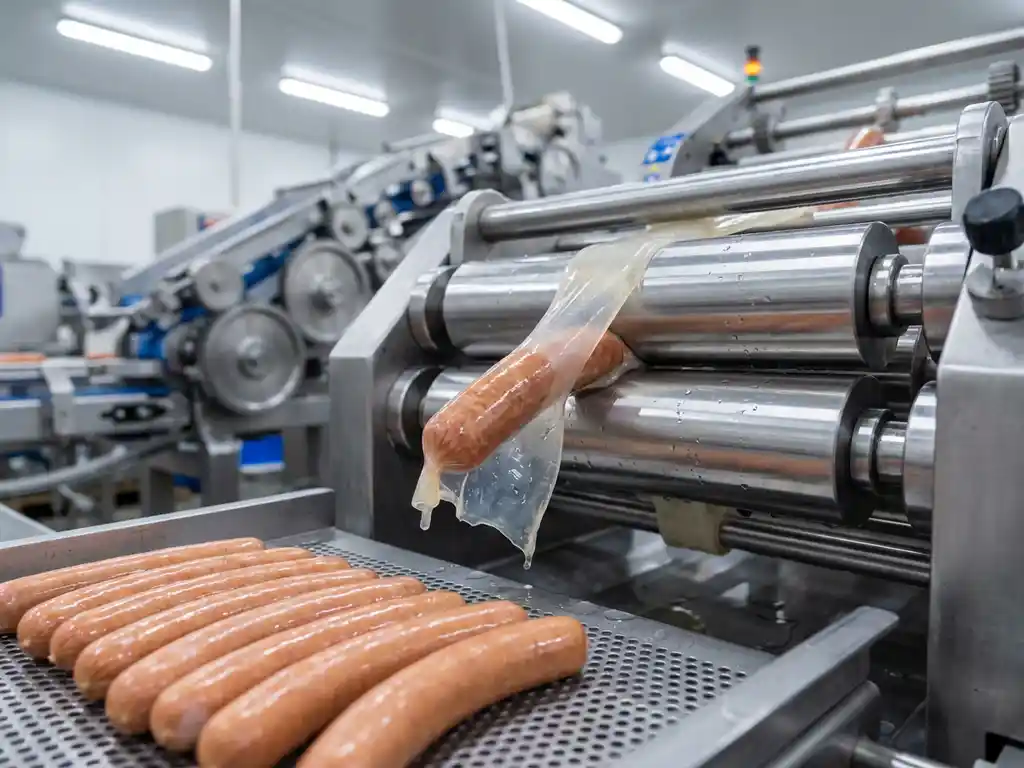
Alginate casings are essential to modern sausage production, providing a plant-based alternative to traditional casings. These casings are crucial for maintaining the quality and efficiency of automated peeling lines, which require specific peelability standards. This article explores the role of alginate casings in food engineering and how Vaess enhances their performance. We’ll cover topics such as the automated peeling process, factors affecting peelability, and how to ensure compliance with industry standards, all while embracing Vaess’s vision of “food for tomorrow.”
What are alginate casings, and why are they important in food engineering?
Alginate casings, derived from seaweed, serve as a plant-based alternative to natural and collagen casings in sausage production. They offer benefits such as consistency, sustainability, and cost-effectiveness, making them a popular choice in the food industry. Alginate casings provide a reliable solution for producers aiming to increase output while maintaining product quality. Their versatility across applications—from meat to plant-based sausages—underscores their importance in modern food engineering and cost reduction strategies.
How does the automated peeling process work for alginate casings?
The automated peeling process for alginate casings involves several precise steps to ensure efficiency. Casings are first aligned and fed into peeling machines, where they are subjected to controlled mechanical force or air pressure to separate the casing from the sausage. This process is optimized for speed and accuracy, reducing reliance on manual labor and minimizing waste. The key to successful peeling lies in maintaining the right balance of environmental conditions and machine settings, contributing to overall cost reduction.
Why are peelability requirements crucial for automated peeling lines?
Peelability requirements are essential for ensuring smooth operations in automated peeling lines. Meeting these standards ensures that casings can be removed without damaging the sausage, preserving product quality and appearance. Inconsistent peelability can lead to increased waste and operational disruptions. Therefore, adhering to precise peelability standards is vital for maximizing efficiency and consistently producing high-quality end products, aligning with cost reduction goals.
What factors affect the peelability of alginate casings?
Several factors influence the peelability of alginate casings, including:
- Environmental conditions: Humidity and temperature can affect casing performance.
- Casing composition: The formulation of the alginate blend affects peelability.
- Machine settings: Proper calibration of peeling equipment is crucial.
- Processing conditions: Factors such as cooking time and temperature also play a role.
Understanding and controlling these elements can significantly improve the peeling process and product quality, contributing to cost efficiency.
How does Vaess enhance peelability in alginate casings?
We offer innovative solutions to improve the peelability of alginate casings:
- Advanced alginate formulations designed for optimal peelability.
- Technical support to fine-tune machine settings for better results.
- Collaboration with partners to test and refine peeling processes.
- Access to Vaess’s extensive Food Technology Centres for practical solutions.
Contact us to learn more about our services and how we can help optimize your production line, driving both quality and cost reduction.
How can you ensure compliance with peelability standards in production?
Ensuring compliance with peelability standards involves several best practices:
- Regular calibration and maintenance of peeling machinery.
- Consistent monitoring of environmental conditions.
- Use of high-quality alginate casings from trusted suppliers such as Vaess.
- Training staff on best practices and troubleshooting techniques.
By implementing these strategies, producers can maintain high standards and ensure efficient, smooth operations, aligning with the theme of cost reduction.
Gerelateerde artikelen
- What are the latest innovations in food tech?
- What are the technical limits of alginate in high-fat or high-moisture sausage formulations?
- How do alginate casings perform under continuous 24/7 production conditions?
- How can alginate be used to develop new sausage formats that collagen casings cannot support?
- How does alginate casing quality affect caliber consistency in automated sausage lines?