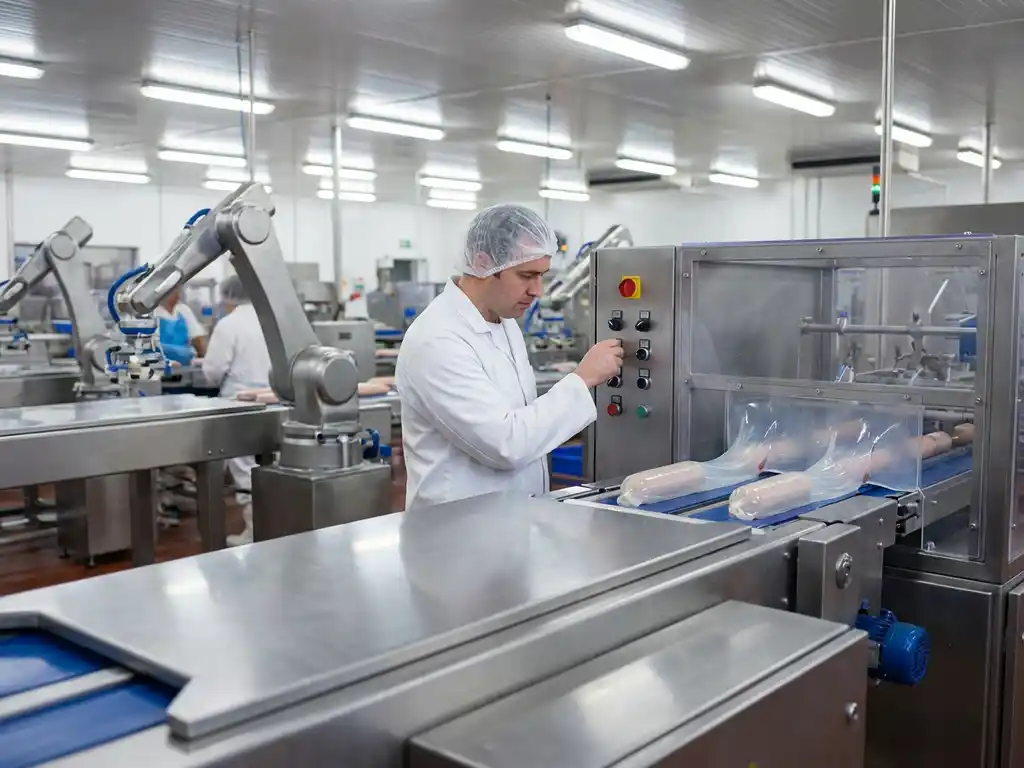
Implementing alginate casing technology on an existing production line typically takes anywhere from a few weeks to several months. This timeline depends on factors such as equipment compatibility, workforce training, and the complexity of the existing production setup. As a leading provider, Vaess helps streamline this process. Below, we explore common questions about alginate casing technology and how it can be effectively integrated into production lines.
What is alginate casing technology, and why is it important?
Alginate casing technology uses a seaweed-derived, plant-based material to create casings for sausages. This technology is significant because it offers a sustainable alternative to traditional casings, such as collagen. Alginate casings match the appearance, bite, and texture of natural casings while being more cost-effective and environmentally friendly. This innovation allows producers to improve sausage production efficiency and meet rising consumer demand for plant-based options, aligning with the theme of cost reduction in the food industry.
How does alginate casing technology work on existing production lines?
Integrating alginate casing technology into existing production lines involves adapting machinery to handle the co-extrusion process. This process creates a gel-like alginate layer around the sausage filling, which is then set using a calcium solution. Companies must ensure their equipment is compatible with alginate casing sausage production and may require minor adjustments or upgrades to ensure smooth operation. Additionally, staff training is crucial to ensure the new technology is used effectively.
What factors affect the time to implement alginate casing technology?
Several factors can influence the time required to implement alginate casing technology:
- Equipment compatibility: Existing machinery may need modifications to accommodate alginate casing processes.
- Workforce training: Employees must be trained in new procedures to ensure efficient production.
- Production volume: Larger operations may take longer to transition due to scale.
- Supply chain coordination: Ensuring a steady supply of alginate and other materials is essential for uninterrupted production.
How can companies prepare for implementing alginate casing technology?
To prepare for adopting alginate casing technology, companies should:
- Conduct an equipment audit to identify necessary upgrades or modifications.
- Develop a comprehensive training program for staff to ensure they are proficient with the new technology.
- Plan a phased implementation to minimize production disruptions.
- Coordinate with suppliers to secure a reliable source of alginate materials.
Thorough preparation can significantly reduce implementation time and improve overall efficiency, contributing to cost reduction in the industry.
How Vaess helps with alginate casing
Vaess provides comprehensive support for companies transitioning to alginate casing technology. Our services include:
- Conducting equipment assessments to ensure compatibility
- Offering training sessions to build workforce proficiency
- Providing technical support during the implementation phase
- Ensuring a consistent supply of high-quality alginate materials
For more information on how we can assist with your production needs, please contact us.
By understanding the intricacies of alginate casing technology and partnering with experts like Vaess, companies can seamlessly integrate this sustainable solution into their production lines, improving efficiency, reducing costs, and meeting evolving market demands. Vaess truly embodies “food for tomorrow.”
Gerelateerde artikelen
- How do procurement managers calculate the true cost difference between alginate and natural casings at volume?
- How are food scientists improving plant-based proteins to contain all essential amino acids?
- To what extent will cellular agriculture and novel proteins redefine global supply chain infrastructure?
- What quality control parameters should procurement set for incoming alginate batches?
- How do retailer private label requirements influence casing material decisions?