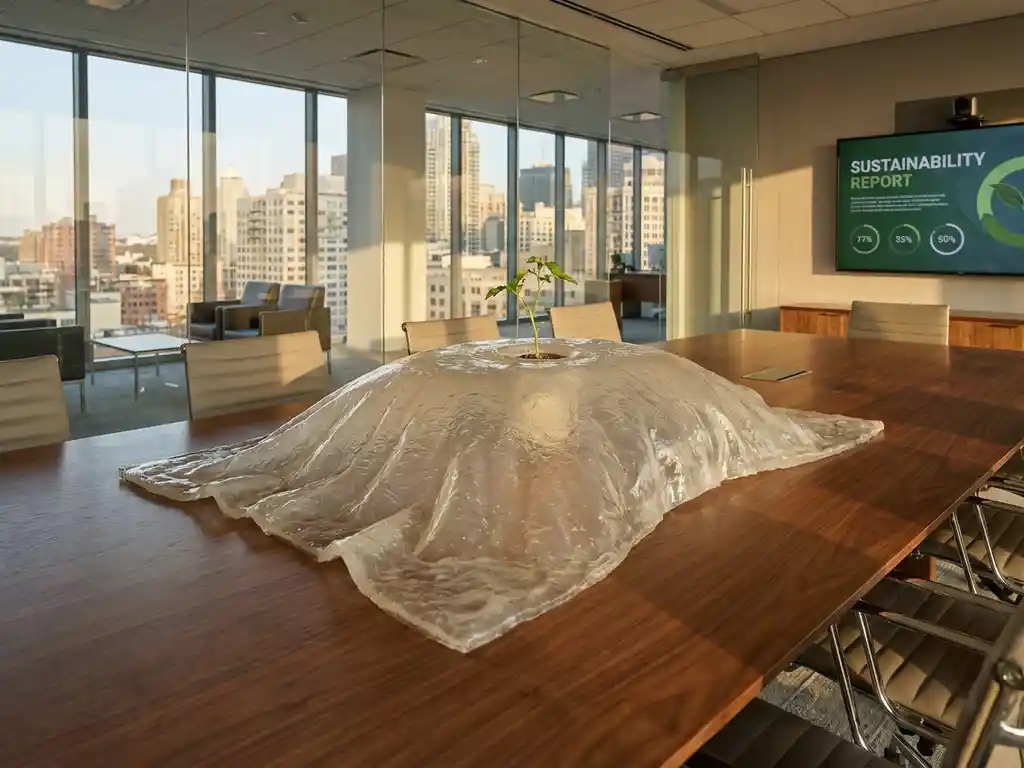
Switching to alginate casings supports corporate sustainability targets by offering a plant-based alternative to traditional casings. Alginate casings, made from seaweed, reduce environmental impact by lowering waste and carbon emissions. This article addresses common questions about alginate casings, their contribution to sustainability, the transition process, and how Vaess, a leader in this technology, can assist with implementation.
What are alginate casings and why are they important?
Alginate casings are a type of sausage casing derived from alginate, a natural polysaccharide obtained from seaweed. These casings are important because they offer a plant-based, sustainable alternative to traditional animal-based casings such as collagen. Alginate casings are essential in modern food production because they support sustainable practices by being biodegradable and reducing reliance on animal products, making them suitable for both meat and plant-based sausages.
How do alginate casings contribute to sustainability targets?
Alginate casings contribute significantly to sustainability targets by reducing waste and carbon emissions. Compared with collagen casings, alginate casings require less energy and water to produce, minimizing environmental impact. Their plant-based nature means they are biodegradable, aligning with corporate goals of reducing landfill waste and promoting sustainable sourcing. This transition supports companies in achieving their environmental objectives while maintaining product quality.
What is the process of switching to alginate casings?
Switching to alginate casings involves several steps. First, companies should evaluate whether their current production lines are compatible with alginate casing technology. Next, it may be necessary to train staff on the new processes and adjust equipment. The final step includes testing and refining production to ensure quality and efficiency. Challenges may include an initial investment in equipment and training, but the long-term benefits of sustainability and cost savings are substantial.
Why choose Vaess for alginate casing solutions?
Vaess stands out as a leader in alginate technology for several reasons:
- Expertise in alginate casing technology, backed by extensive industry experience.
- Comprehensive solutions through the proprietary AgerGel range.
- Support for various applications, including meat, plant-based, halal, and kosher products.
- Backed by the world’s largest alginate gel production facility.
How does Vaess help with alginate casing implementation?
Vaess assists companies in implementing alginate casings through specialized support:
- Food Technology Centres that offer testing and innovation sessions.
- Expert guidance on optimizing production lines for alginate casings.
- Training programs to ensure a seamless transition and staff proficiency.
- Continuous innovation to align with market trends and sustainability goals.
To explore how Vaess can assist your business in transitioning to alginate casings, contact us today to discuss your needs and sustainability targets, and become part of the ‘food for tomorrow’ movement.
Gerelateerde artikelen
- How do alginate casings reduce dependency on geographically concentrated natural casing supply chains?
- How do natural casing price fluctuations affect long-term sourcing strategies for sausage producers?
- How does switching to alginate casings affect production line efficiency?
- How does alginate support texture consistency across different protein sources?
- How does alginate sourcing align with EU Green Deal supply chain expectations?