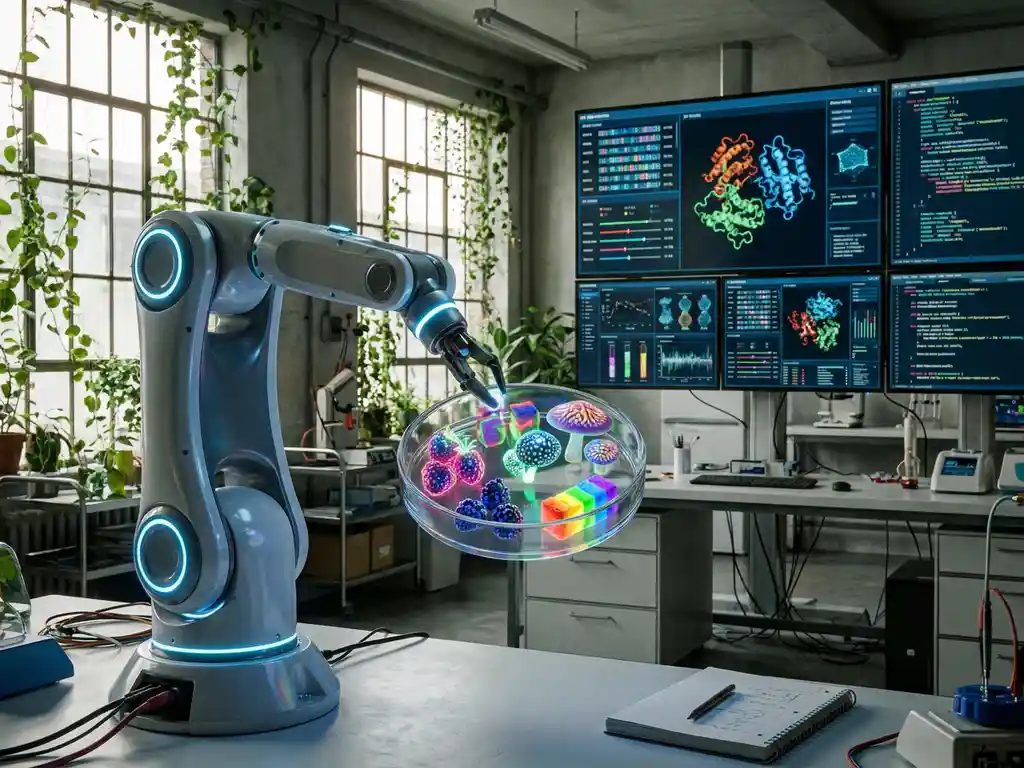
Biotechnology and AI-driven formulation are reshaping food technology R&D priorities by enabling more precise, efficient, and sustainable food production methods. Biotechnology allows for the development of innovative ingredients and processes, while AI-driven formulation optimizes product development through data analysis and predictive modeling. Together, they help food companies meet consumer demands for quality, sustainability, and innovation. This article explores the roles of biotechnology and AI in food technology, comparing traditional methods with AI-driven approaches, and examining the shift in R&D priorities.
What is the role of biotechnology in food technology?
Biotechnology plays a crucial role in food technology by enhancing food production processes, improving nutritional content, and developing sustainable food solutions. It involves using biological systems and organisms to create or modify food products, resulting in better efficiency and innovation. For more insights, explore the various industries we impact.
Through genetic engineering, biotechnology can enhance crop resistance to pests and diseases, leading to higher yields and reduced reliance on chemical pesticides. It also enables the production of functional ingredients like probiotics and enzymes that improve food quality and shelf life. With the growing demand for sustainable and nutritious food options, biotechnology offers solutions that align with consumer preferences and industry needs.
How does AI-driven formulation enhance food R&D?
AI-driven formulation enhances food R&D by leveraging data analytics and machine learning to optimize product development processes. This technology helps researchers identify ingredient interactions, predict consumer preferences, and streamline experimentation.
By analyzing vast datasets, AI can uncover patterns and insights that might be missed through traditional R&D methods. This leads to faster development cycles, cost savings, and the ability to tailor products to specific market needs. AI-driven formulation also supports the creation of hybrid food innovations, merging plant-based and traditional proteins to meet evolving consumer demands for new flavors and textures. Discover more about our approach on our essence page.
What’s the difference between traditional and AI-driven food formulation?
The primary difference between traditional and AI-driven food formulation lies in the use of technology to streamline and enhance the development process. Traditional formulation relies on manual experimentation and trial-and-error, while AI-driven formulation utilizes data-driven insights.
Traditional methods can be time-consuming and resource-intensive, often requiring extensive testing to achieve desired results. In contrast, AI-driven approaches use algorithms to predict outcomes and optimize formulations, reducing development time and costs. This technological advancement allows food companies to quickly adapt to market trends and consumer preferences, driving innovation and efficiency in product development.
Why are R&D priorities shifting in the food industry?
R&D priorities in the food industry are shifting due to increasing consumer demand for sustainable, nutritious, and innovative food products. Companies are focusing on developing solutions that address environmental concerns, health trends, and technological advancements.
Factors such as climate change, resource scarcity, and the rising popularity of plant-based diets are driving the need for sustainable food solutions. Additionally, the integration of biotechnology and AI-driven formulation allows companies to create products that are not only environmentally friendly but also cost-effective and scalable. As a result, R&D efforts are increasingly centered on leveraging technology to meet these evolving priorities.
How can biotechnology and AI lead to sustainable food solutions?
Biotechnology and AI can lead to sustainable food solutions by improving resource efficiency, reducing waste, and enabling the development of environmentally friendly products. Biotechnology enhances crop yields and nutrient content, while AI optimizes production processes and supply chains.
By utilizing these technologies, companies can reduce their carbon footprint and create products that align with sustainability goals. AI-driven formulation also helps in designing hybrid food innovations, which incorporate sustainable ingredients while maintaining taste and quality. These advancements are crucial in addressing the global challenge of feeding a growing population sustainably.
How does Vaess help reshape food technology R&D priorities?
At Vaess, we are committed to reshaping food technology R&D priorities through our expertise in biotechnology and AI-driven formulation. Our efforts focus on:
- Developing hybrid food innovations that combine plant-based and traditional proteins.
- Utilizing AI to streamline product development and optimize ingredient interactions.
- Creating scalable and sustainable food solutions across meat, fish, bakery, and plant-based sectors.
Our dedication to innovation and sustainability ensures that clients can meet market demands and set new industry standards. To learn more about our solutions and how we can support your R&D efforts, contact us today to start a collaboration that drives the future of food technology.
Gerelateerde artikelen
- What lead time differences should production planners account for when sourcing alginate versus natural casings?
- Why are legumes considered one of the most sustainable sources of alternative protein?
- How does alginate support texture consistency across different protein sources?
- What sensory differences do consumers perceive between alginate and natural casings?
- What role does alginate play in the development of portion-controlled formed meat products?