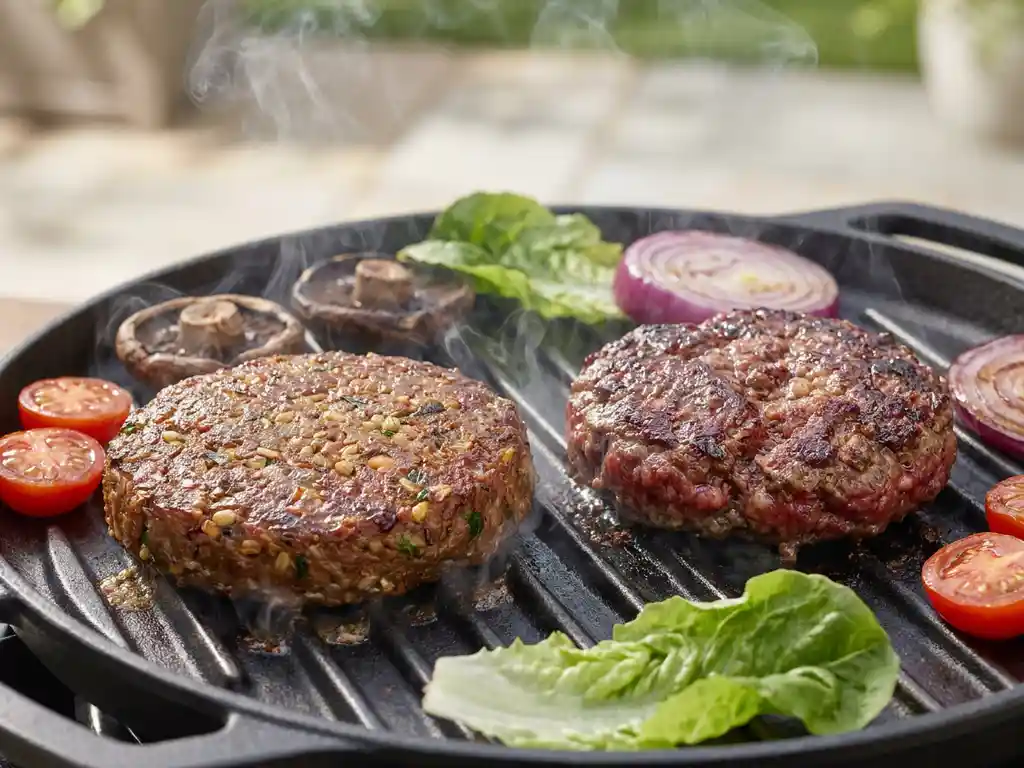
Plant-based burgers offer a healthier alternative to conventional beef as they typically contain less saturated fat, no cholesterol, and a variety of nutrients derived from plants. However, they can be heavily processed and contain additives, which may not appeal to everyone. This article explores the health benefits, manufacturing processes, and nutritional differences between plant-based and beef burgers, providing insights into their role in the growing alternative protein market.
What are plant-based burgers?
Plant-based burgers are meat alternatives made primarily from ingredients like legumes, grains, and vegetables, designed to mimic the taste and texture of beef. These burgers cater to consumers seeking sustainable and ethical food choices. They are part of the broader alternative protein market, targeting those reducing meat consumption for health, environmental, or ethical reasons. For more information about the industries involved, visit Vaess Industries.
Key ingredients often include pea protein, soy, wheat gluten, and various vegetable oils. These components are combined to recreate the juicy and meaty texture of traditional beef burgers. Plant-based burgers are continuously evolving, with innovations focusing on improving taste and nutritional profiles to better align with consumer expectations.
Are plant-based burgers healthier than beef?
Plant-based burgers are often considered healthier than beef as they typically contain less saturated fat and no cholesterol. They also provide fiber, which is absent in beef. However, their healthiness can vary based on the specific brand and ingredients used.
While plant-based options generally offer a heart-healthier profile, it’s important to note that some products may be high in sodium and contain additives to enhance flavor and texture. Consumers should read labels carefully to choose options that align with their dietary needs. Nonetheless, the shift towards plant-based diets is supported by research suggesting benefits for heart health and weight management. To understand the essence of plant-based nutrition, explore Our Essence.
How are plant-based burgers made?
Plant-based burgers are made by processing plant-derived ingredients to mimic the taste and texture of meat. This involves blending proteins, starches, and fats with flavorings and colorings. The process is designed to replicate the experience of eating a beef burger.
- Protein is extracted from plants such as peas or soybeans.
- Fats and oils, like coconut or canola oil, are added for juiciness.
- Natural flavors and colorings, such as beet juice, enhance taste and appearance.
- Binders like methylcellulose or starch help maintain the burger’s shape.
The manufacturing process involves extruding the mixture to achieve a meat-like texture. This method is pivotal in the meat alternative manufacturing process, allowing for scalability and consistency. As technology advances, new techniques continue to enhance the sensory attributes of plant-based burgers.
Do plant-based burgers contain less fat than beef?
Yes, plant-based burgers generally contain less saturated fat than beef burgers. They often use healthier fats such as those derived from plants, contributing to their lower fat content. However, overall fat content may vary depending on the recipe and brand.
While plant-based burgers typically have less saturated fat, some may still have comparable total fat content due to added oils for texture and flavor. Consumers seeking low-fat options should compare nutritional labels to select burgers that meet their dietary preferences while providing essential nutrients.
How does Vaess help with plant-based burger innovation?
Vaess plays a crucial role in plant-based burger innovation by engineering solutions that enhance taste, texture, and nutritional value. Their expertise in food innovation and hybrid foods positions them as leaders in the alternative protein sector.
- Developing hybrid products that combine plant-based and traditional proteins.
- Optimizing texture, juiciness, and taste through advanced fat technology and clean-label solutions.
- Utilizing their Food Technology Centres for innovation sessions and co-extrusion processes.
By leveraging their extensive expertise, Vaess enables food manufacturers to create unique, scalable products that meet the demands of modern consumers. To learn how Vaess can support your plant-based innovations, contact us for a consultation.
Gerelateerde artikelen
- How do you structure a supplier scorecard for alginate casing vendors in a food manufacturing context?
- How do procurement managers calculate the true cost difference between alginate and natural casings at volume?
- What are the red flags when evaluating a new alginate casing supplier for large-scale production?
- What equipment upgrades are required to implement alginate co-extrusion in existing plants?
- How does alginate casing shrinkage compare to collagen during heat treatment?