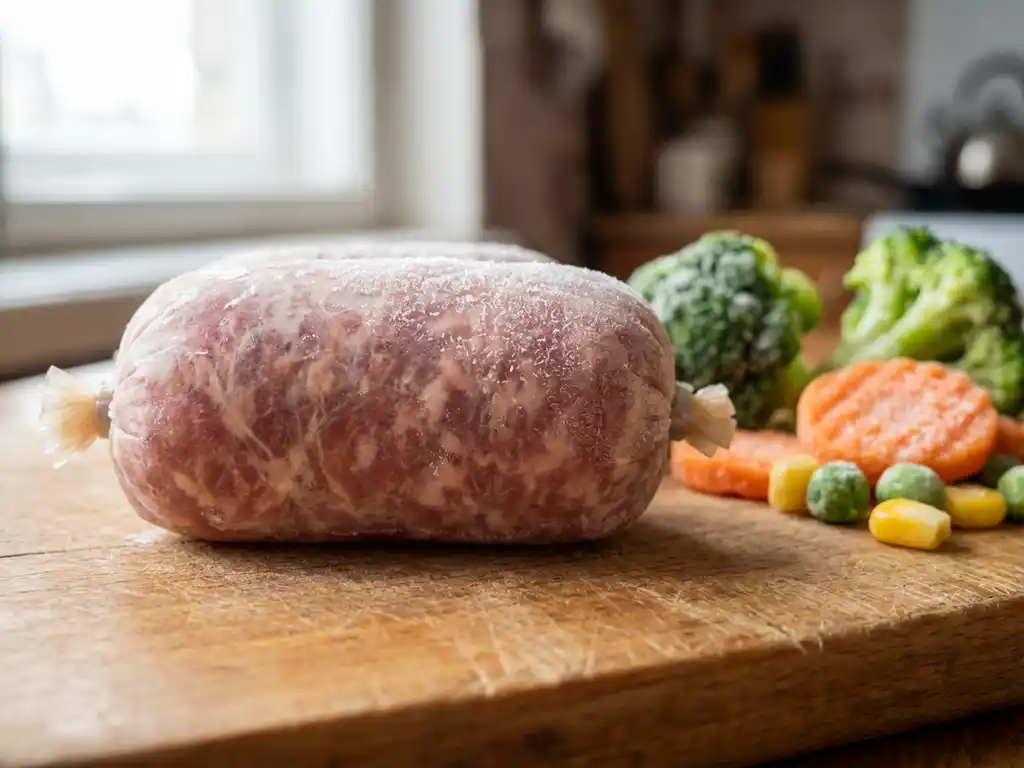
Alginate casings, derived from seaweed, have become a key component in frozen product lines due to their superior performance and cost-effectiveness. These plant-based casings maintain their structural integrity and quality even under freezing conditions, making them ideal for preserving the texture and taste of sausages. This article explores the functionality of alginate casings in frozen environments, their benefits, potential challenges, and how we at Vaess support their optimization.
What are alginate casings?
Alginate casings are a plant-based alternative to traditional sausage casings, made from alginate extracted from seaweed. Known for their flexibility and strength, these casings are widely used in the food industry for sausages and other co-extruded products. Unlike collagen casings, alginate offers a sustainable and vegan-friendly option without compromising the appearance, bite, and texture that consumers expect from natural casings.
How do alginate casings perform in frozen conditions?
In frozen conditions, alginate casings retain their durability and integrity, ensuring the product does not lose its shape or quality. Alginate’s natural properties help prevent moisture loss and preserve the sausage’s flavor and texture. This makes alginate an excellent choice for frozen product lines, where maintaining product quality during storage is crucial.
Why are alginate casings beneficial for frozen product lines?
Alginate casings offer several advantages for frozen products:
- Preservation of texture and flavor during freezing and thawing
- Cost efficiency through scalable production and reduced material waste, aligning with themes of cost reduction in the food industry
- Sustainability, offering a plant-based alternative to traditional casings
These benefits make alginate a preferred choice for producers looking to balance quality with sustainability in their frozen food offerings.
What challenges exist with alginate casings in frozen products?
While alginate casings are highly effective, there are some challenges to consider. One potential issue is ensuring the casing adheres to the sausage under various freezing and thawing conditions. Additionally, producers must optimize their production processes to fully leverage alginate’s benefits. Understanding these challenges and addressing them through careful process management is essential for success in frozen product applications.
How Vaess helps with alginate casings
At Vaess, we offer comprehensive support in optimizing alginate casings for frozen product lines. Our expertise includes:
- Customized development of alginate formulations to meet specific product needs
- Technical support for integrating alginate casings into existing production processes
- Access to our state-of-the-art alginate technology facilities for testing and innovation
- Collaborative partnerships to drive continuous improvement and innovation
By choosing Vaess, you gain a partner dedicated to enhancing your product quality and operational efficiency. Contact us today to learn how we can assist in optimizing your frozen product lines with alginate casings, as part of our commitment to ‘food for tomorrow’.
Gerelateerde artikelen
- What are the main compliance risks when using alginate casings in EU food production?
- How does switching to alginate casings affect production line efficiency?
- What sustainability claims can food manufacturers make when using alginate casings?
- How does alginate influence moisture retention and cook loss in heat-treated products?
- How does alginate casing shrinkage compare to collagen during heat treatment?