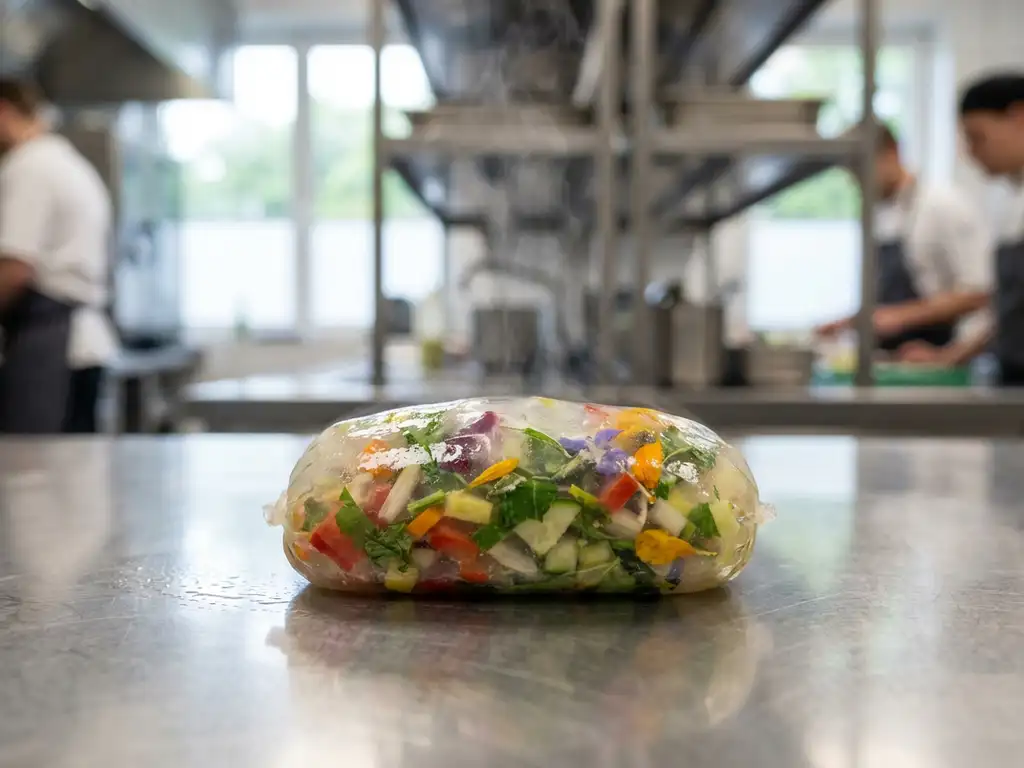
Alginate casings are a versatile and sustainable option for sausage production, made from seaweed-derived materials. They perform well in high-temperature processes such as retorting and pasteurization, maintaining the sausage’s texture and flavor. Vaess, a leader in alginate technology, enhances these casings for efficiency and quality, offering solutions that align with modern food trends. This article explores how alginate casings work and the benefits they offer under specific processing conditions.
What are alginate casings and how are they used?
Alginate casings are plant-based casings derived from seaweed and are primarily used in sausage production. They provide a sustainable alternative to traditional natural or collagen casings, offering a similar appearance and texture. Alginate casings are designed for high-speed, continuous co-extrusion lines, making them ideal for a variety of applications, including meat, plant-based, halal, and kosher sausages. They help manufacturers reduce costs, increase output, and minimize waste, aligning with evolving consumer preferences for sustainable food options and driving cost reduction in the food industry.
How do retort and pasteurization conditions affect alginate casings?
Retorting and pasteurization are high-temperature processes that can affect food products. Alginate casings, however, maintain their integrity under these conditions. Unlike some casings that may degrade or affect the product’s texture, alginate casings remain stable, ensuring the sausage retains its desired bite and flavor. This heat stability is one of the reasons alginate casings are preferred over collagen casings in many industrial applications.
What are the benefits of using alginate casings under pasteurization?
Alginate casings offer several advantages during pasteurization:
- They preserve the sausage’s texture and flavor, providing a consistent eating experience.
- The casings are plant-based, making them suitable for various dietary needs.
- They support high-speed production, optimizing efficiency and reducing labor costs.
These benefits make alginate casings an attractive choice for producers looking to enhance product quality while maintaining production efficiency and reducing overall costs.
How does Vaess enhance the performance of alginate casings?
Vaess leverages its expertise in alginate technology to improve casing performance. Our proprietary AgerGel range is engineered for optimal functionality across diverse applications, including fresh, cooked, and dried sausages. Key enhancements include:
- Ensuring high-speed compatibility with continuous co-extrusion lines
- Providing a consistent and reliable alternative to traditional casings
- Improving production efficiency and reducing operational costs
Our innovations in alginate technology help producers meet market demands while maintaining high production standards. For more information on how Vaess can assist with your sausage processing needs, visit our contact page.
Hoe Vaess helpt met alginaatdarmen
Vaess speelt een cruciale rol bij het verbeteren van de prestaties van alginaatdarmen onder verschillende verwerkingsomstandigheden. Met onze uitgebreide knowhow zorgen wij voor:
- Efficiënte productieprocessen door technologieën die de arbeidskosten verlagen
- Een hogere productkwaliteit dankzij stabiele darmen die smaak en textuur behouden
- Inspelen op moderne voedseltrends met duurzame, plantaardige oplossingen
Neem contact met ons op om te ontdekken hoe Vaess uw productieproces kan optimaliseren met onze geavanceerde oplossingen voor alginaatdarmen.
Gerelateerde artikelen
- What lead time differences should production planners account for when sourcing alginate versus natural casings?
- What are the main compliance risks when using alginate casings in EU food production?
- What is the total cost of ownership of alginate casings vs. collagen casings at scale?
- What operational risks arise when transitioning from collagen to alginate casings?
- How does alginate casing quality affect caliber consistency in automated sausage lines?