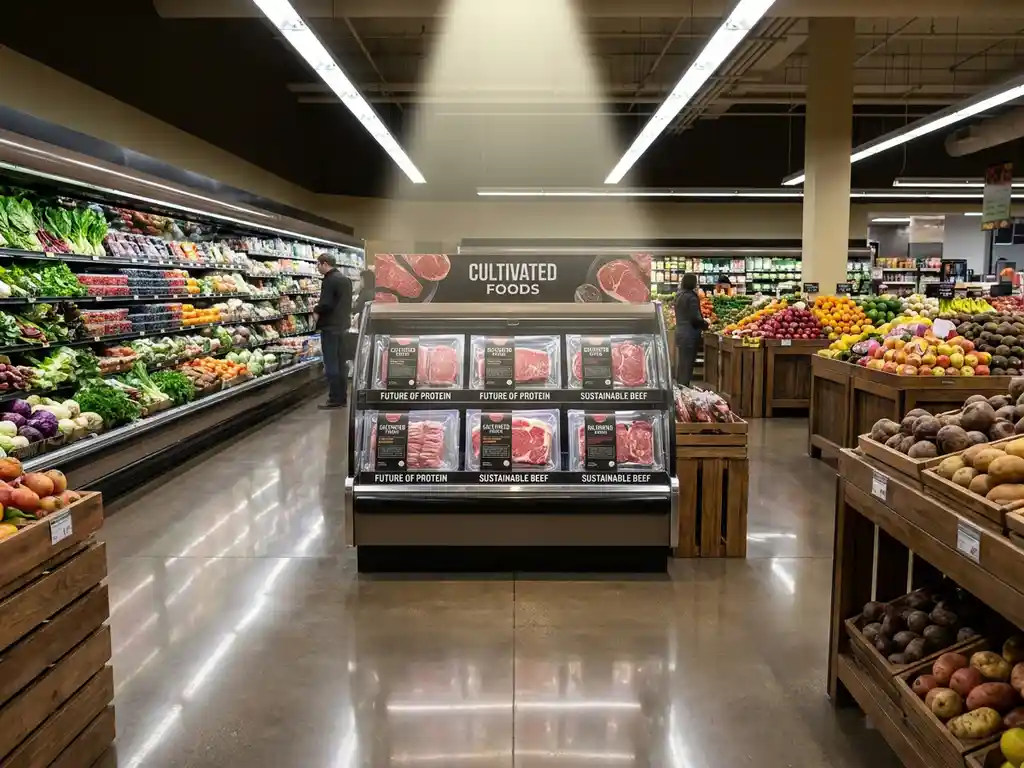
Yes, lab-grown meat is being sold in select grocery stores this year. As the demand for sustainable and ethical alternatives to traditional meat grows, more retailers are beginning to stock lab-grown meat products. This shift is driven by advancements in food technology and increasing consumer awareness of the environmental impact of conventional meat production. In this article, we will explore how lab-grown meat is produced, its benefits, the regulatory landscape, and how Vaess contributes to its integration in grocery stores. For more on our industry involvement, visit our industries page.
What is lab-grown meat?
Lab-grown meat, also known as cultured or cell-based meat, is a type of meat produced by cultivating animal cells in a controlled environment. Unlike traditional meat, which requires raising and slaughtering animals, lab-grown meat is created through cellular agriculture. This process involves extracting cells from an animal and then growing them in a nutrient-rich culture medium, where they multiply to form muscle tissue. The result is meat that is biologically identical to conventional meat but produced in a more sustainable and ethical manner. Learn more about our values at Our Essence.
The concept of lab-grown meat addresses several issues associated with traditional livestock farming, including animal welfare concerns, greenhouse gas emissions, and land use. By eliminating the need for large-scale animal farming, lab-grown meat has the potential to significantly reduce the environmental footprint of meat production.
How does lab-grown meat reach grocery stores?
Lab-grown meat reaches grocery stores through a streamlined supply chain that begins in specialized laboratories and ends on store shelves. The process starts with the cultivation of animal cells in bioreactors, where they are nurtured until they form edible muscle tissue. Once the meat reaches sufficient maturity, it undergoes processing to enhance texture and flavor before packaging for retail distribution.
Distribution strategies for lab-grown meat involve partnerships with retailers and food service providers. As production scales up, more grocery chains are willing to stock these innovative products, recognizing the growing consumer demand for sustainable alternatives. Additionally, marketing efforts highlight the ethical and environmental benefits, attracting health-conscious and eco-aware shoppers.
What are the benefits of buying lab-grown meat?
Buying lab-grown meat offers several benefits, primarily focusing on sustainability, ethical considerations, and potential health advantages. Firstly, lab-grown meat significantly reduces the environmental impact of meat production by lowering greenhouse gas emissions, requiring less water, and using less land compared to traditional livestock farming.
From an ethical standpoint, lab-grown meat eliminates the need for animal slaughter, addressing animal welfare concerns. It provides consumers with a guilt-free meat option that aligns with growing ethical considerations. Additionally, lab-grown meat can be tailored to be healthier by controlling fat content and enhancing nutritional profiles, potentially offering a more nutritious alternative to conventional meat.
Are there regulations for selling lab-grown meat?
Yes, there are regulations for selling lab-grown meat, and these vary by country. Regulatory bodies are developing frameworks to ensure the safety, labeling, and market entry of lab-grown meat products. In the United States, the Food and Drug Administration (FDA) and the United States Department of Agriculture (USDA) share oversight of lab-grown meat, focusing on pre-market safety assessments and labeling requirements.
In Europe, the European Food Safety Authority (EFSA) is involved in setting guidelines for the approval and monitoring of lab-grown meat products. These regulations aim to ensure that lab-grown meat meets the same safety standards as conventional meat and that consumers are well-informed about the products they purchase.
How Vaess helps with lab-grown meat integration in grocery stores
At Vaess, we assist in the integration of lab-grown meat into grocery stores through our expertise in food innovation and hybrid foods. Our contributions include:
- Developing functional ingredients that enhance the texture and flavor of lab-grown meat.
- Providing scalable, cost-effective solutions that facilitate production efficiency.
- Collaborating with retailers to create market-ready products that meet consumer demands.
By leveraging our innovative technologies and industry partnerships, we help bridge the gap between lab-grown meat production and retail success. To explore our solutions and see how we can assist your business, contact us today.
Gerelateerde artikelen
- What is the total cost of ownership of alginate casings vs. collagen casings at scale?
- How does alginate perform in plant-based and meat analog product development?
- How does alginate casing technology support product differentiation in premium segments?
- What operational risks arise when transitioning from collagen to alginate casings?
- How does alginate sourcing align with EU Green Deal supply chain expectations?